





Last updated: September 2026 · Prices & availability verified for the 2026/2027 season
Last updated: September 09, 2026
This is the story our guides tell on the crossing from Labuan Bajo, the context behind the ranger-led trek that anchors every itinerary we sail, from 3D2N open trips to private expeditions through Komodo National Park. We’ve been introducing travelers to these living fossils since 2015, and the backstory is stranger than most guests expect: the Komodo dragon, or Varanus komodoensis, is the largest living lizard species on Earth, and most visitors get its evolutionary origin completely wrong. Here’s the full story: where it actually came from, when the West first found out about it, and why it survives nowhere else on the planet.
Poin-Poin Penting
- The Komodo dragon evolved in Australia roughly 4 million years ago, not on the Indonesian islands where it lives today, fossils place it in Flores by around 1.4 million years ago.
- It’s the largest living lizard, reaching up to 3 metres and 150 kg, and an apex predator with a venomous, bacteria-laden bite.
- It shares a common ancestor with Megalania, an extinct 5+ metre Australian giant monitor, but the two are distinct species, not the same lineage.
- Its closest living relative is the lace monitor of eastern Australia.
- It survives today only because Wallacea’s isolation shielded it from the extinctions that wiped out its Australian relatives, with the Padar Island population itself going extinct in the 20th century.
- Western science only documented the species in 1910–1912, though the Manggarai people of Flores had long known and revered it as the ora.
- It’s currently listed as Endangered by the IUCN, protected primarily within Komodo National Park, a UNESCO World Heritage Site since 1991.
- It is not related to dinosaurs, the resemblance is convergent evolution, not shared ancestry.
komodo : Kapan Komodo Pertama Kali Ditemukan?
Although the Komodo dragon has lived for thousands of years in the Lesser Sunda Islands, it wasn’t until the early 20th century that the outside world learned about it. Rumours of a “land crocodile” (buaya darat) in the Lesser Sundas reached Dutch colonial officials for years before Lieutenant van Steyn van Hensbroek sailed to Komodo in 1910, following reports from local fishermen who’d long known the animal as the “ora” in the Manggarai language.
Not believing the stories at first, van Hensbroek went to see for himself. He secured a specimen and sent its skin and photographs to Pieter Antonie Ouwens, director of the zoological museum at Buitenzorg, today’s Bogor. Ouwens published the formal scientific description in 1912, naming it Varanus komodoensis, and within three years the colonial government had granted the species legal protection, an unusually fast conservation response for the era. Since then, the Komodo dragon has drawn global attention and was even dubbed “the last dinosaur” by the media, a nickname that, as you’ll see below, is more myth than fact.
Taksonomi & Nama Ilmiah: Di Mana komodo ?
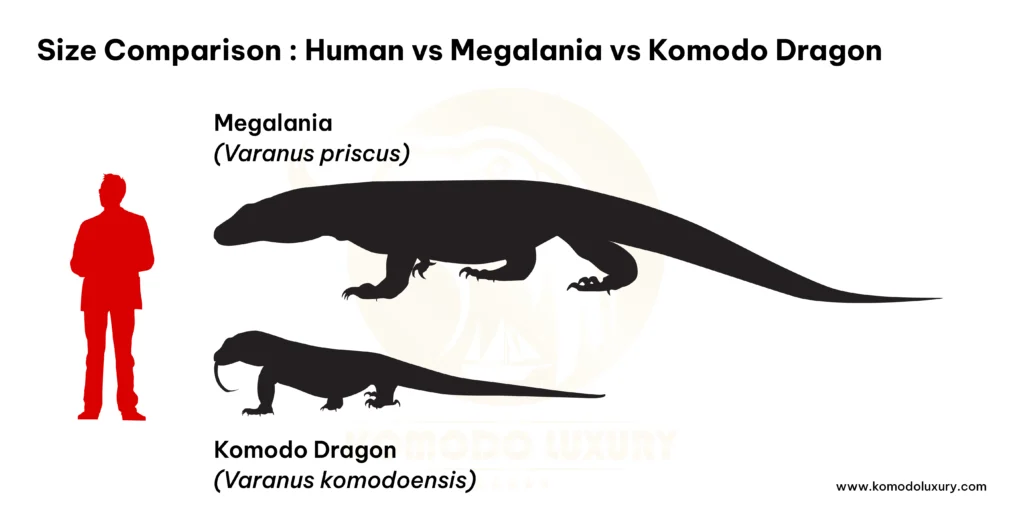
komodo dalam keluarga Varanidae (kadal monitor), dengan kerabat dekat seperti kadal monitor Asia dan Australia. Nama ilmiahnya, Varanus komodoensis, diberikan oleh Ouwens sebagai penghormatan kepada Pulau Komodo. Reptil ini memiliki kepala yang lebar dan datar, moncong yang membulat, serta ekor yang berotot, yang semuanya berkontribusi pada penampilannya yang khas. Namun, taksonominya pernah menjadi bahan perdebatan.
Pada tahun 1920-an, para ilmuwan berpendapat bahwa komodo subspesies dari kadal raksasa Australia yang telah punah, Megalania prisca, yang punah sekitar 50.000 tahun yang lalu. Namun, analisis DNA telah membuktikan bahwa keduanya berbeda, meskipun memiliki nenek moyang yang sama. Saat ini, komodo sebagai spesies unik yang berevolusi secara terpisah di Indonesia. Sebagai predator puncak, mereka mendominasi ekosistemnya, memainkan peran penting dalam menjaga keseimbangan habitatnya. Selain itu, komodo mengandung bakteri yang berpotensi berbahaya dan kemungkinan memiliki sifat beracun, yang memainkan peran penting dalam strategi berburu dan predasinya.
Megalania: Ancient Cousin, Not Ancestor
Australia’s Pleistocene savannas were once ruled by Varanus priscus, Megalania, a monitor lizard estimated at over 5 metres long, the largest terrestrial lizard known to science. Early 20th-century scientists actually thought the Komodo dragon was a subspecies of Megalania, but DNA analysis has since proven the two are separate species that share a common ancestor rather than a direct lineage.
Komodo dragons belong to that same giant-monitor radiation, close kin, not descendants. When Australia’s megafauna collapsed in the late Pleistocene, Megalania went with it. The smaller, island-isolated Komodo dragon survived, which is why Komodo National Park is sometimes called a living window into Ice Age Australia, the one place where the age of giant monitors never actually ended.
Baca Selengkapnya: komodo Megalania: Membandingkan Dua Kadal Raksasa dalam Sejarah
Sejarah Evolusi: komodo Mana komodo Menurut Catatan komodo?
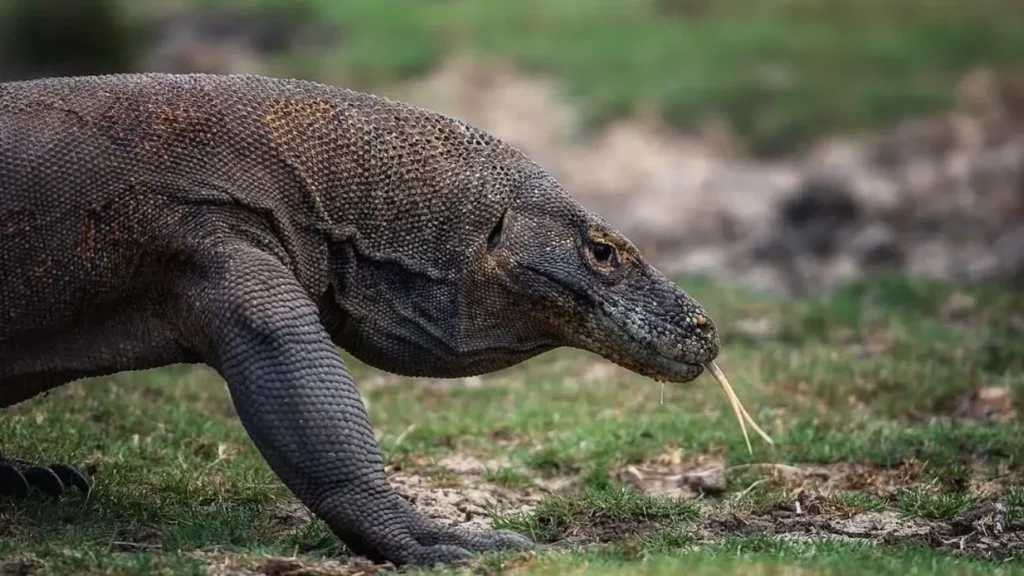
Here’s the part most people get backwards: the Komodo dragon is often assumed to be a purely Indonesian product, a modest monitor that grew huge in isolation on its islands. The fossil record tells a different story.
Fossil evidence published in 2009 by Scott Hocknull’s team, drawing on Queensland Museum material, shows the species evolved in Australia around four million years ago, as part of an entire radiation of giant monitor lizards, not a lone island oddity. Excavations in eastern Australia produced Varanus komodoensis fossils millions of years old, proving the species reached full size on a continent before it ever saw Flores. That finding quietly undermines the tidy textbook tale of “island gigantism”: the Queensland fossils indicate dragons were already dragon-sized in Australia, so the islands preserved their bulk rather than produced it.
From there, ancestors dispersed westward along the volcanic chain of the Lesser Sunda Islands using land bridges formed by falling sea levels. Fossils place dragons on Flores by roughly 1.4 million years ago, the lineage was established in Wallacea long before recorded history. On Flores, Rinca, and the surrounding islands, they evolved into apex predators, their size shaped by available prey, from small lizards to ancient pygmy elephants (Stegodon), with modern-day Javan rusa deer now their main food source.
Interestingly, a 2021 study by the Australian National University complicated the picture further, finding that the modern Komodo dragon population as we know it today actually diversified within Indonesia rather than being a simple direct transplant from Australia, opening ongoing scientific debate about exactly how the species became the dominant predator on these islands. Today’s dragons are best described as a relict giant: the last surviving member of an Australian dynasty, holding out on a handful of savanna islands.
The Evolutionary Timeline
| When | Event |
| ~4 million years ago | Komodo dragon lineage present in Australia (Hocknull et al., 2009; Queensland fossils, ~3.8–4 Ma) |
| ~1.4 million years ago | Fossils attributable to Komodo dragons appear on Flores, the lineage established in Wallacea |
| ~50,000–40,000 years ago | Giant relatives, including Megalania, vanish from Australia; the Komodo dragon becomes the last giant varanid |
| 1910 | Lieutenant van Steyn van Hensbroek investigates “land crocodile” reports on Komodo |
| 1912 | P.A. Ouwens formally describes Varanus komodoensis at Buitenzorg (Bogor) |
| 1915 | Dutch colonial authorities grant the species legal protection |
| 1980 / 1991 | Komodo National Park established; inscribed as UNESCO World Heritage Site |
Baca Selengkapnya: Apakah komodo di Australia? Ketahui Faktanya dan Jelajahi Pulau Komodo!
Why Did Komodo Dragons Survive Only in Indonesia?
If the species evolved in Australia, why does it only exist in Indonesia today? The consensus explanation is isolation plus extinction elsewhere.
During Pleistocene ice ages, sea levels dropped by more than a hundred metres, narrowing the straits of Wallacea enough for a strong-swimming monitor lizard to island-hop westward along the volcanic chain. Crucially, Wallacea’s deep channels never closed completely, which kept Asian big cats, wild dogs, and other mainland carnivores out. When seas rose again, the populations on Flores and its satellite islands were cut off, and cut off, too, from the mainland catastrophes that later wiped out their Australian relatives. On their dry savanna islands, dragons kept what mattered: abundant deer and pig prey, no competing large carnivores, and (for most of history) no human hunting pressure heavy enough to erase them.
That balance is still dynamic, not static: the dragon population on Padar Island went extinct in the twentieth century after its prey base collapsed, which is part of why the species is now listed as Endangered on the IUCN Red List rather than the “Vulnerable” rating it held in earlier decades.
Apakah komodo Kerabat Dinosaurus?
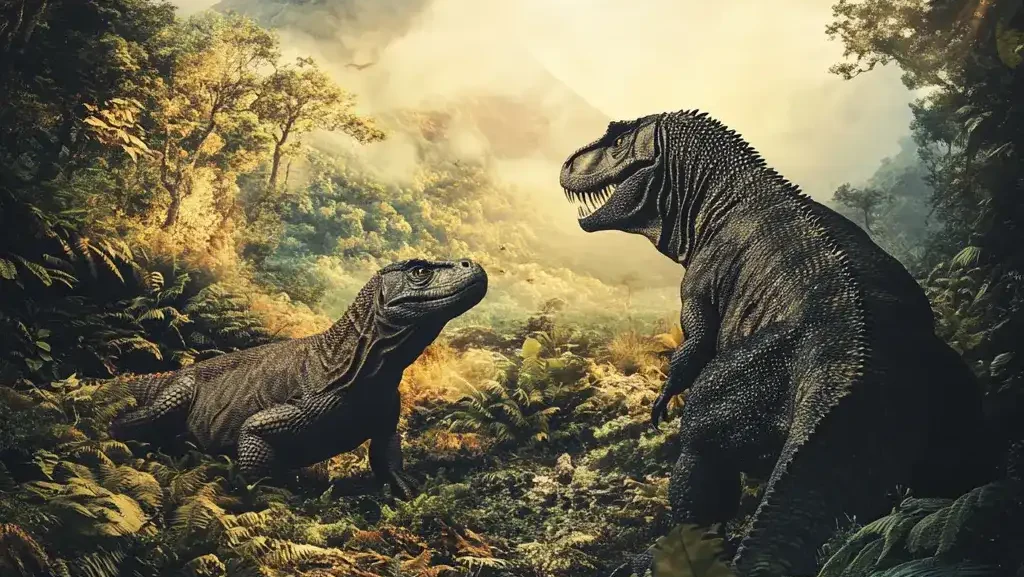
Meskipun sering disebut sebagai “dinosaurus hidup”, komodo tidak komodo hubungan langsung dengan dinosaurus seperti T-Rex atau Brachiosaurus. Dinosaurus punah 66 juta tahun yang lalu, sedangkan keluarga Varanidae baru muncul sekitar 40 juta tahun yang lalu.
Namun, terdapat beberapa kesamaan adaptif antara komodo dinosaurus. Salah satu contohnya adalah gigitan mematikan mereka, yang mengandung bakteri berbahaya—mirip dengan konsep racun pada dinosaurus. Fenomena ini dikenal sebagai evolusi konvergen, di mana dua spesies yang tidak memiliki hubungan kekerabatan mengembangkan ciri-ciri serupa akibat tekanan lingkungan yang serupa. Racun komodo menunjukkan kemiripan dengan racun ular, karena keduanya menggunakan racun sebagai mekanisme berburu atau pertahanan terhadap mangsa atau ancaman. Meskipun komodo dinosaurus sejati, ia telah berevolusi dengan beberapa ciri bertahan hidup yang menyerupai predator purba.
Baca Selengkapnya: Apakah komodo dengan Dinosaurus? Menjelajahi Hubungan Prasejarah, Kelangsungan Hidup, dan Pertarungan dengan T-Rex
Apa Saja Mitos dan Makna Budaya dari komodo?
For the Manggarai people of Flores, the Komodo dragon is far more than a giant lizard, it’s a mystical being intertwined with human life and spirituality. In the Komodo village telling, the Putri Naga, the Dragon Princess, bore twins: a human son, Si Gerong, and a dragon daughter, Orah. Raised apart, the two met as hunters chasing the same deer; when Si Gerong raised his spear against her, the princess appeared between them and revealed their kinship. To this day, islanders call the animals ora and treat them as kin, a living reason the community protected the species for generations before any statute did.
That belief in twin-sibling kinship has encouraged a genuine coexistence: locals traditionally avoid hunting the dragons, and in turn the dragons rarely pose a threat to people. The giant lizard is also seen as a guardian of nature, capable of sensing bad intentions and maintaining the balance of the ecosystem. You can go deeper into this tradition in the legend of the Komodo Dragon and in the Ora legend, which preserves the older, community-held version of the same story.
Why are Komodo dragons important? Ecologically, they’re the apex predator regulating deer, boar, and buffalo populations across the park. Scientifically, they’re a living window into large-varanid evolution stretching back to Australia. Culturally, they’re kin in the origin story of the island’s own people. Three reasons, one species, anchoring an entire UNESCO World Heritage Site.
Apa saja 5 fakta menarik tentang komodo?
While the Komodo dragon’s evolutionary history and cultural legends reveal its remarkable past and significance, there are also some fascinating biological and behavioral traits that make this giant lizard truly unique. Here are 5 interesting Komodo dragon facts that highlight their extraordinary adaptations and survival skills:
- Kadal Terbesar yang Masih Hidup – komodo dewasa komodo tumbuh hingga panjang 3 meter (10 kaki) dan beratnya mencapai 150 kg (330 pon). Ukuran raksasanya menjadikan mereka kadal terbesar yang masih hidup saat ini dan mudah dikenali.
- Predator Puncak – komodo di puncak rantai makanannya, memburu rusa, reptil yang lebih kecil, dan sesekali memakan bangkai. Anggota tubuhnya yang kuat, cakar yang tajam, serta indra yang tajam menjadikan mereka pemburu yang sangat efektif di alam liar.
- Gigitan Berbisa – Kadal-kadal ini memiliki kelenjar racun yang mengeluarkan toksin, dan air liurnya mengandung bakteri berbahaya. Kombinasi ini membantu mereka melemahkan atau melumpuhkan mangsa, sehingga perburuan menjadi lebih efisien.
- Parthenogenesis – Betina komodo bereproduksi secara aseksual tanpa jantan, dan menghasilkan keturunan jantan yang dapat bertahan hidup. Kemampuan langka ini memungkinkan populasi komodo untuk mempertahankan kelangsungan hidupnya bahkan di lingkungan yang terisolasi.
- Exceptional Swimming Ability – Komodo dragons can swim surprisingly well, allowing them to move between islands in their habitat. This skill helps them expand their territory and access new hunting grounds across the Indonesian archipelago.
komodo ini memberikan gambaran sekilas mengenai biologi dan strategi bertahan hidup mereka yang luar biasa, sekaligus menyoroti alasan mengapa mereka dianggap sebagai salah satu reptil paling mengagumkan di planet ini.
Baca Selengkapnya: komodo vs Faktakomodo : Anda Tidak Akan PercayaSebenarnya Benar!
komodo : Di Mana komodo Dapat Ditemukan?
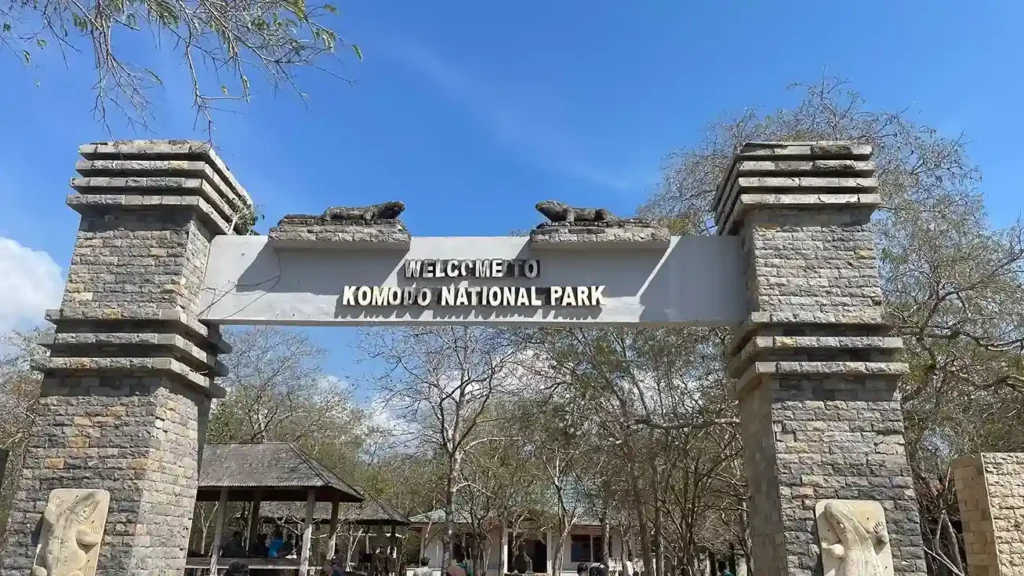
komodo di lima pulau di Indonesia: Komodo, Rinca, Flores, Gili Motang, Nusa Kode, dan Gili Dasami. Mereka lebih menyukai sabana kering, hutan tropis, dan pesisir berbatu. Meskipun mereka berkembang biak dengan baik di hutan tropis, mereka juga dapat ditemukan di habitat padang rumput dan semak belukar di pulau-pulau tersebut. Suhu panas di sabana membantu mereka berburu, karena mereka mengandalkan lompatan kecepatan singkat untuk menyergap mangsa hidup mereka di lingkungan tersebut.
Sayangnya, habitat alami mereka terancam oleh perubahan iklim dan aktivitas manusia. Naiknya permukaan laut merupakan ancaman besar bagi habitat komodo, yang semakin memecah belah dan mengisolasi populasi mereka. Namun, upaya untuk melindungi mereka melalui Taman Nasional Komodo, sebuah Situs Warisan Dunia UNESCO, telah berhasil melestarikan lebih dari 80% komodo di dunia. Taman ini bukan hanya suaka bagi komodo, tetapi juga bagi spesies langka dan terancam punah lainnya.
Baca Selengkapnya: komodo : Di Mana Mereka Tinggal dan Cara Melihatnya
Status Konservasi: Melindungi komodo
The Komodo dragon is currently listed as Endangered on the IUCN Red List, an uplisting from its earlier “Vulnerable” status that reflects continued habitat loss, poaching pressure, and fragmentation across its already-restricted range. The Indonesian government established Komodo National Park in 1980, a UNESCO World Heritage Site now sheltering over 1,700 dragons, with ongoing habitat restoration, research, and education programs, and international trade in the species is prohibited under IUCN protections. One added genetic wrinkle: because parthenogenesis produces only male offspring, isolated populations can face female shortages and elevated inbreeding risk, adding another layer to long-term survival planning.
Baca Selengkapnya: Sejarah Taman Nasional Komodo: Keajaiban Alam dan Situs Warisan Dunia UNESCO
Di mana Anda dapat melihat komodo dengan aman komodo Taman Nasional Komodo?
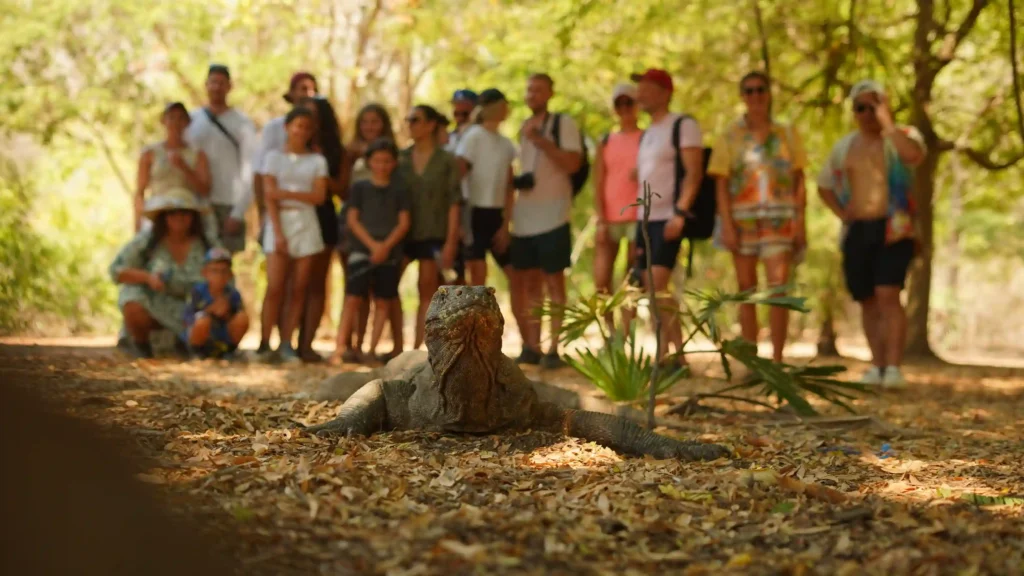
Meskipun habitat komodotersebar di beberapa pulau, tempat terbaik untuk melihatnya dengan aman adalah Pulau Komodo dan Rinca . Kedua pulau tersebut merupakan bagian dari Taman Nasional Komodo, yang dilindungi dengan ketat. Di sini, pengunjung didampingi oleh pemandu lokal yang ahli dalam perilaku komodo memastikan Anda dapat mengamati mereka dengan aman.
Berkat peraturan yang ketat, para pengunjung dapat mendekati komodo tanpa takut diserang—asalkan mereka mematuhi aturan. Kedua pulau ini memiliki populasi komodo yang cukup besar, sehingga peluang untuk menjumpai komodo sangat tinggi. Anda juga akan dapat menikmati pemandangan alam yang menakjubkan, termasuk pantai-pantai indah dan perairan yang jernih.
Baca Selengkapnya: Pulau Komodo Rinca : Mana yang Lebih Baik untuk Melihat komodo?
Nikmati petualangan yang aman petualangan melihat komodo Komodo Luxury
For an adventure that’s not only exciting but also comfortable, Komodo Luxury offers complete tour packages to Komodo Island. Our tours include luxurious accommodations, experienced guides, and a strong focus on safety, allowing you to explore Komodo National Park with confidence.
One of the most iconic ways to experience this journey is through a luxury phinisi Komodo, where you can sail across the islands on a beautifully crafted traditional vessel combined with modern luxury amenities. This experience allows you to enjoy curated island routes, personalized service, and breathtaking ocean views, giving you a seamless way to explore the habitat of Komodo dragons while traveling in comfort and style.
komodo bukti nyata keajaiban evolusi di Indonesia. Mulai dari migrasi purba dan adaptasi unik hingga kisah-kisah budaya yang memikat, komodo dinobatkan sebagai harta nasional. Melihat “naga” ini secara langsung bukan hanya pengalaman yang luar biasa, tetapi juga pelajaran berharga tentang kekuatan alam dan keanekaragaman hayati Indonesia.
If you want to witness this once-in-a-lifetime experience, make sure to choose a trusted tour that combines safety, comfort, and education. Don’t miss out on the chance to see history unfold right in front of you. Book your Komodo Island tour today and witness the living history of the Komodo dragon!

Pertanyaan Umum (FAQ) tentang Sejarah dan Tempat Wisat komodo
Four million years of history are still walking around Komodo and Rinca Island today. Komodo Luxury brings guests face-to-face with them on sailing trips from Labuan Bajo, see the Komodo sailing trip itineraries for 2D1N and 3D2N routes.
Ikuti jejak sejarah ini di tempat kejadiannya: paket perjalanan kami menggabungkan trekking Loh Liang dengan Padar dan Pink Beach dalam satu rute lingkar — lihat paket “tour Komodo ” atau rencanakan rute yang lebih santai dengan kapal pesiar.
By the Komodo Luxury Expedition Team, a licensed Komodo National Park tour operator running daily expeditions from Labuan Bajo since 2015. Fleet, rates and itineraries: Komodo yacht charter.