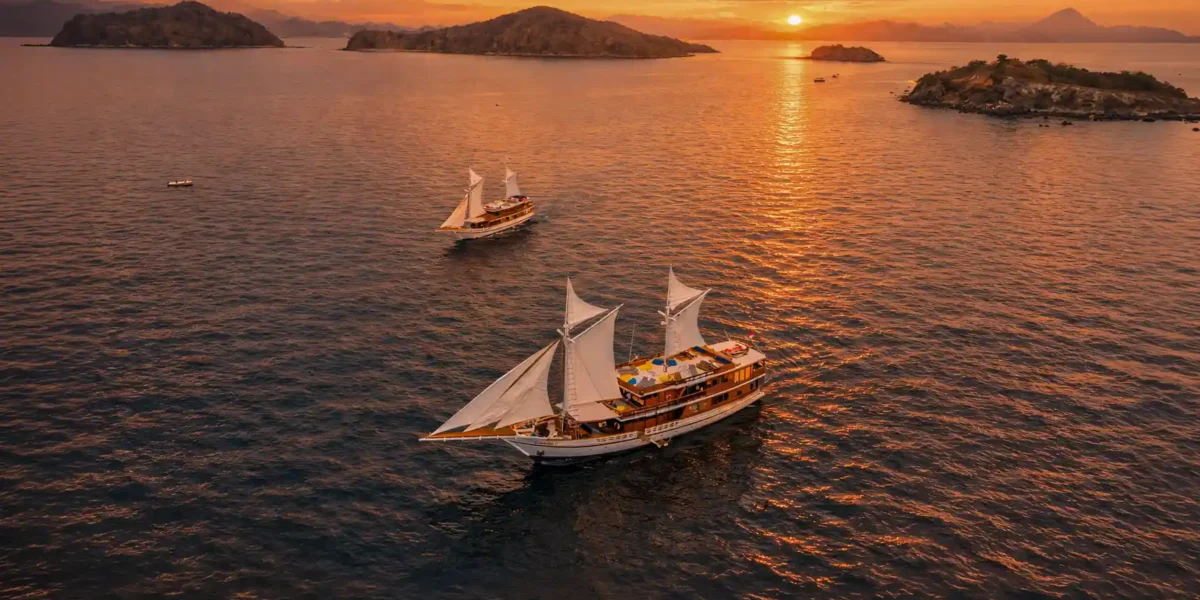



In recent months, sailing safety has become a topic many travelers are paying closer attention to—especially those planning to explore Labuan Bajo and Komodo National Park. This concern is understandable, particularly for first-time visitors who are not yet familiar with the area’s sea conditions, which are influenced by strong currents, shifting winds, and seasonal weather patterns.
However, most concerns don’t come solely from the ocean itself. They often come from a lack of understanding of how maritime safety actually works. Many people see the sea as unpredictable and dangerous, without realizing how much safety depends on the captain’s experience, the boat’s condition, and the decisions made before and during a voyage.
This article is written to offer a clearer and more realistic understanding of sailing safety in Komodo—through the perspective of captains who have spent years navigating these waters. These are people who know the sea not from theory, but from daily experience on the water.
As a luxury travel provider in Komodo, we believe we have a responsibility to share accurate and transparent information about sailing safety. For this reason, we spoke directly with our captains, each of whom has more than ten years of experience sailing in the waters of Labuan Bajo. From their insights, we explore a fundamental question many travelers ask: what actually causes a boat to sink—and how safety is managed in real-life sailing operations.
Key Takeaways
- A boat almost never sinks because of a single cause. Serious incidents at sea usually happen when multiple factors come together, such as human decisions, vessel condition, sea environment, and how risks are managed over time.
- Local captain experience matters more than technology alone. Navigation tools are helpful, but they cannot replace real-world knowledge of local currents, wave behavior, and high-risk areas like narrow straits.
- Regulations provide a baseline, not a guarantee. Sailing permits and inspections are important, but real safety depends on daily maintenance, onboard culture, and real-time decisions at sea.
A Boat Almost Never Sinks Because of One Single Cause
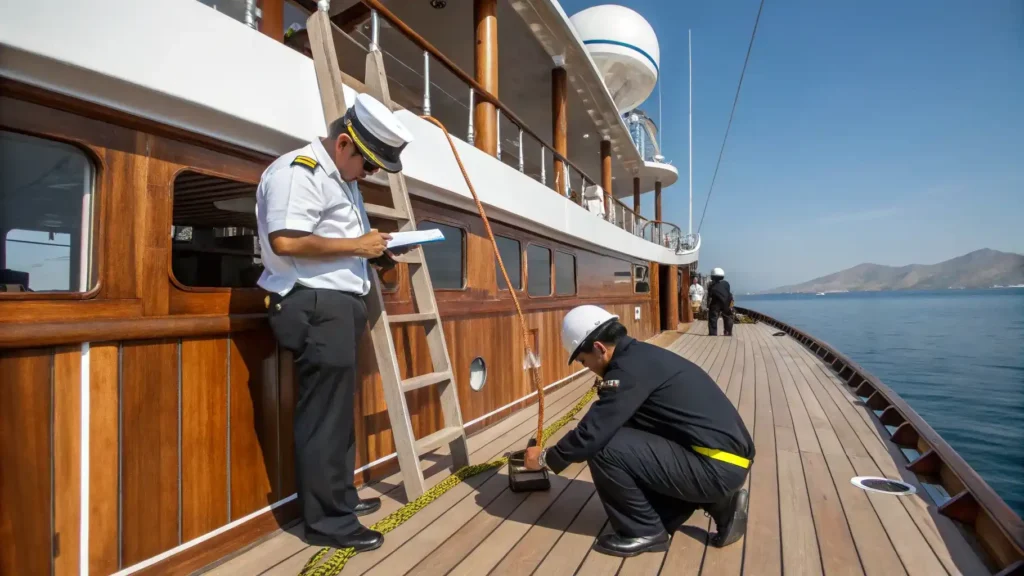
Based on the experience of captains who have spent 10–20 years sailing in Komodo waters, a boat almost never sinks due to a single mistake. In reality, serious maritime incidents usually happen because several factors come together over time.
There is a shared principle among experienced captains:
“If a serious incident happens at sea, the warning signs usually appear long before.”
This means that dangerous situations rarely come out of nowhere. Before conditions become critical, there are usually early indicators—such as changing weather, increasing waves, technical issues, or operational conditions that are no longer ideal. Each of these signs gives the captain and crew time to reassess and adjust their decisions.
Risk increases when multiple factors appear at the same time and are not handled properly. In these situations, the issue is not one single cause, but a chain of decisions that were not adapted to changing conditions.
This is why sailing safety is never determined by just one element. Boat condition, crew experience, continuous monitoring of sea conditions, and decision-making all work together. An experienced captain reads these signals early and takes preventive action before a situation becomes dangerous.
How Does Bad Weather Affect the Risk of a Vessel Sinking?
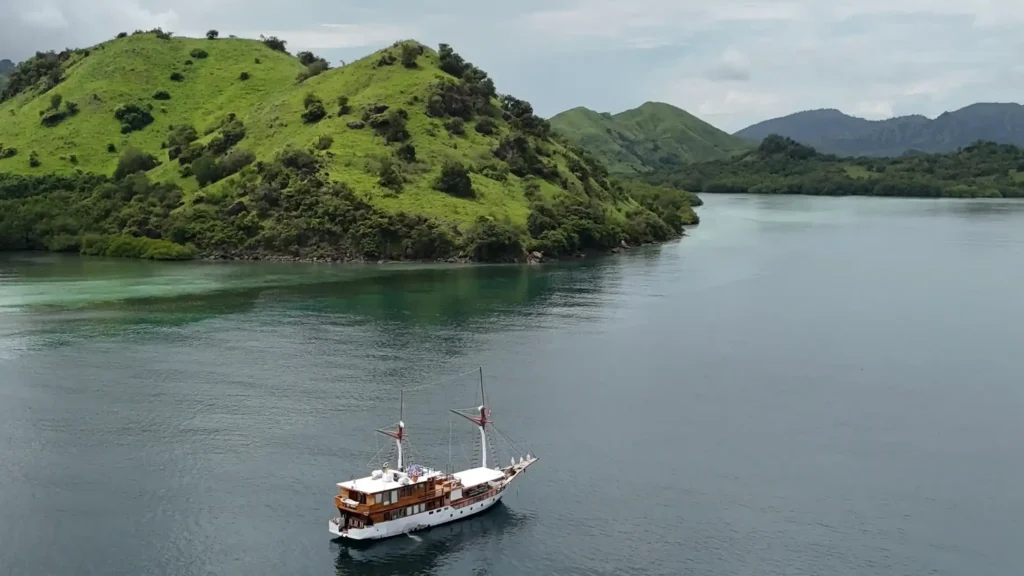
Bad weather is often assumed to be the main reason a vessel sinks. Strong winds, heavy rain, and high waves are usually blamed when an incident happens at sea. However, in most sailing operations—especially in tourism—weather alone is rarely the direct cause.
In areas like Komodo National Park, changing weather conditions are part of daily maritime life. Waves, wind, and currents are expected and well understood by experienced captains. These conditions can increase risk, but they do not automatically lead to danger when vessels are properly prepared and decisions are made carefully.
The key factor is how weather is managed. Professional operations rely on continuous weather monitoring, real-time sea observations, and clear operational limits. Captains may adjust speed, change routes, delay departures, or cancel trips entirely to prioritize safety. These decisions are part of a responsible safety system, not last-minute reactions.
In reality, vessels do not sink simply because of bad weather. Incidents usually occur when weather risks are underestimated or when preparation and judgment fail to match the conditions at sea. Safety is not about avoiding weather—it is about understanding it and responding wisely.
How a Boat Can Sink: The Real Process at Sea
Based on firsthand experience in Komodo waters, the process of a boat sinking usually follows a sequence like this:
1. The Boat Encounters Challenging Sea Conditions
This often begins with higher waves, stronger currents, or unexpected current crossings. On their own, these conditions are not necessarily dangerous if handled correctly.
2. Speed or Maneuvering Is Not Adjusted
Problems start when the boat continues at a speed that does not match its load, size, or the sea conditions. In this situation, the boat can no longer move naturally with the waves, and waves begin to hit the vessel directly.
3. Water Starts Entering the Boat
Due to wave impact or poor positioning, water may enter certain areas of the boat. Under normal circumstances, this can still be managed if the drainage and pump systems are working properly.
4. Pumps or Engine Do Not Perform Optimally
If pumps are weak or the engine experiences issues—due to poor maintenance, contaminated fuel, or worn components—water cannot be removed efficiently. At this stage, risk increases significantly.
5. The Boat Loses Maneuverability
If the engine weakens or stops in areas with strong currents or waves, the boat loses its ability to maneuver. It can no longer position itself safely against the waves or current.
6. Water Accumulation Affects Stability
If the situation continues without quick action, the increasing weight of water can cause the boat to lose balance and, eventually, sink.
This process shows that boats do not sink suddenly or randomly. It is usually the result of a series of conditions and decisions that were not adjusted in time.
Read more: Komodo Sailing Trip Safety Tips 2026: Essential Before Sailing
Key Factors That Affect Sailing Safety

From the process above, several key factors play a major role in determining sailing safety.
1. Decisions Made by the Captain and Crew
At sea, human decision-making plays the biggest role. Every decision made by the captain and crew—before departure and during the trip—directly affects the safety of the boat and everyone onboard.
A captain is not just someone who drives the boat. They are fully responsible for the vessel, the crew, and the safety of all passengers. This makes decision quality extremely important.
Common risky decisions include:
- Not adjusting speed according to load and wave conditions
- Relying too heavily on navigation instruments without reading the sea directly
- Lack of clear instructions or crew readiness as conditions change
Experienced captains understand that waves themselves are not always dangerous. The real problem often comes from moving too fast in the wrong conditions. When speed is too high, control shifts from the captain to the waves, making the boat harder to manage.
Knowing when to slow down, change course, delay departure, or stop entirely is a critical skill—one that comes from experience, awareness, and sound judgment.
2. Boat and Engine Condition
Technical condition is another crucial factor in sailing safety, and one that is often invisible to passengers. A boat may look clean and impressive on the outside, while hidden issues exist in the engine room, internal systems, or hull structure.
Common technical issues found in the field include:
- Irregular maintenance, including hull checks and docking
- Engines with declining performance that are still being used
- Water pumps or fuel systems that do not function properly
According to experienced Komodo captains, poorly maintained boats almost always show warning signs long before an incident occurs. Small leaks, weakening engines, or malfunctioning systems can become serious risks, even when the boat looks fine externally.
Many sinking cases start with water entering the boat. When this water cannot be removed quickly due to pump failure, it can lead to engine shutdown. Losing engine power in strong currents or waves greatly increases danger.
Fuel quality is another overlooked issue. Dirty fuel tanks can cause engines to stall mid-journey. In open waters, even a minor engine issue can quickly escalate if not anticipated.
Technology and navigation tools are helpful, but they can never replace proper, routine maintenance. Sailing safety depends on the overall readiness of the vessel—from engines and hull to every supporting system.
3. Captain Experience and Knowledge of Local Waters
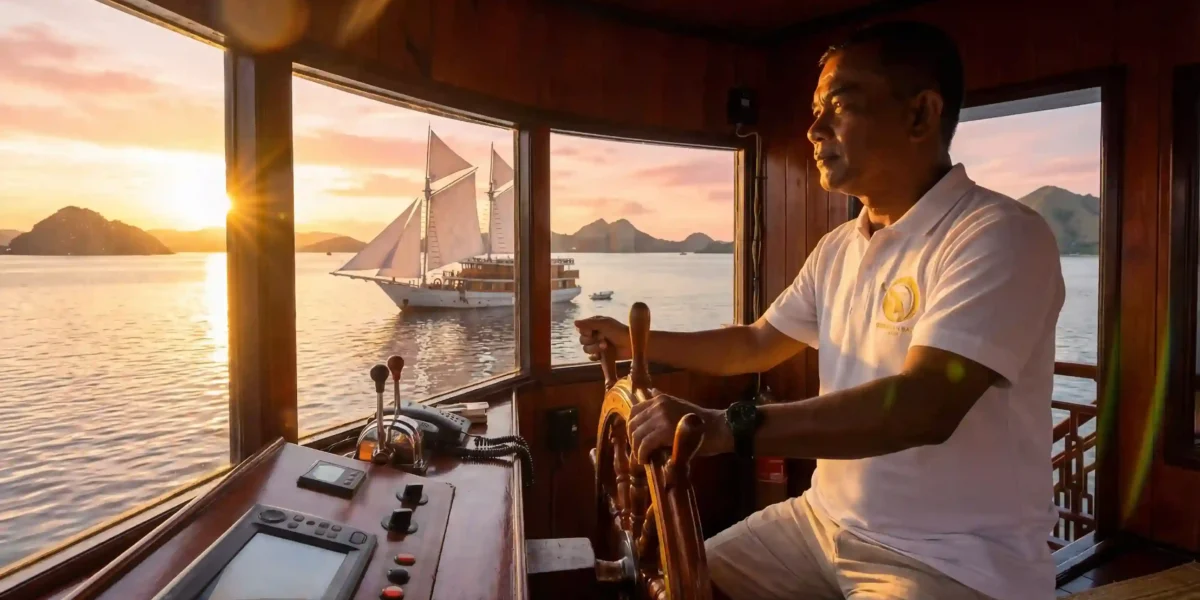
A captain’s understanding of the sea is a key safety factor. Experienced captains don’t rely solely on maps or instruments—they read the water, adjust speed, and maneuver based on real-time conditions.
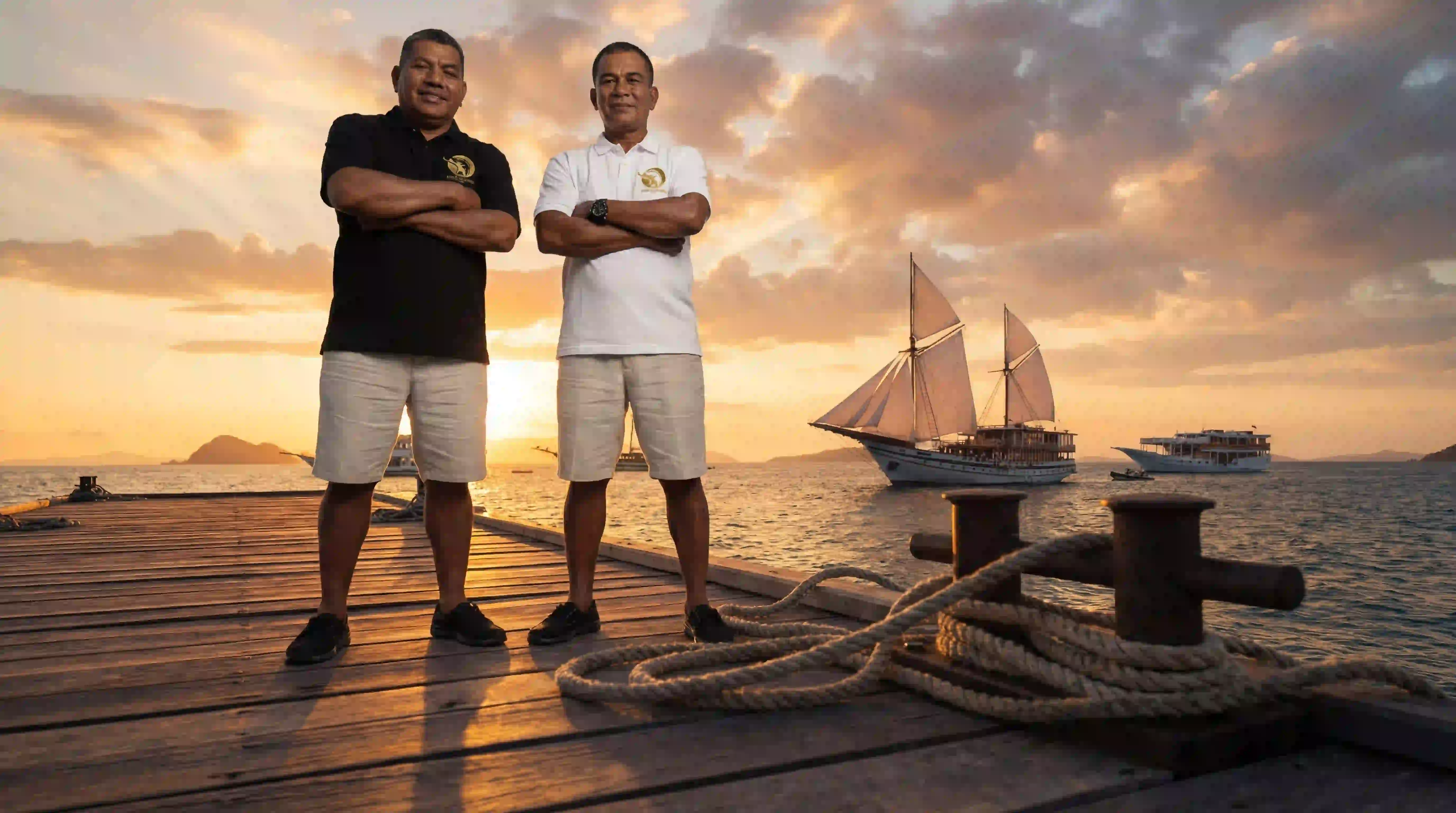
“After more than 20 years sailing in Komodo waters, we know the current patterns here. We know when to slow down, when to change direction, and when to stop,” says Captain Bay.
Certification is important, but it alone does not guarantee safety. True safety comes from hands-on experience—knowing how a boat reacts to waves and currents, and being able to judge whether a journey should continue or be adjusted.
Local knowledge is especially important in Komodo. Currents can change quickly and are not always visible on the surface. Captains who regularly sail these routes understand which areas require extra caution and at what times conditions are strongest.
This experience allows captains to make fast, preventive decisions when unexpected situations arise—keeping the journey safe for everyone onboard.
4. The Role of the Crew
Beyond the captain, the crew plays a vital role in maintaining safety. Crew members are not only responsible for daily operations but also for ensuring safety procedures are followed consistently.
Each crew member must be properly certified, trained, and ready to respond—especially when conditions change. A well-prepared crew can quickly follow instructions, check safety equipment, and keep onboard conditions under control.
According to Komodo Luxury captains, crew readiness is essential. Crew members guide guests to safe areas, ensure life jackets and emergency equipment are accessible, and provide clear instructions during rough conditions.
Safety at sea is always a team effort. The captain makes decisions, but the crew ensures those decisions are carried out efficiently and calmly.
5. Safety Supported by Regulations
Sailing safety is also supported by strict regulations. These rules act as a first layer of protection to ensure that every boat is seaworthy before departure.
Key regulatory elements include:
- Boats must meet safety standards and hold valid sailing permits
- The harbor master (Syahbandar) inspects vessels for technical and safety compliance
- Sailing permits are issued only when all safety requirements are met
The harbor master also considers external factors such as weather and sea conditions before granting clearance. Regular inspections help maintain standards, although they can never replace the captain’s judgment at sea.
Read more: Komodo Boat Safety Standards 2026: Sailing Safely in Luxury
What Travelers Should Understand Before Sailing in Komodo
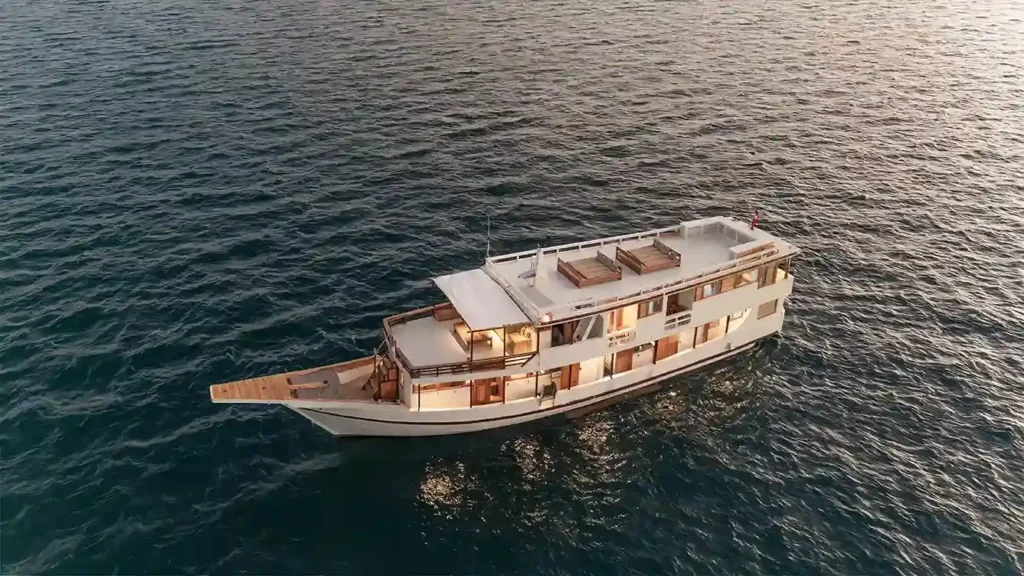
Sailing safety is never determined by a single factor. A safe journey is the result of sound decisions, technical readiness, and deep understanding of the sea.
Before choosing a sailing trip, travelers should:
- Ensure the boat has valid sailing permits
- Observe whether the captain and crew appear experienced and communicative
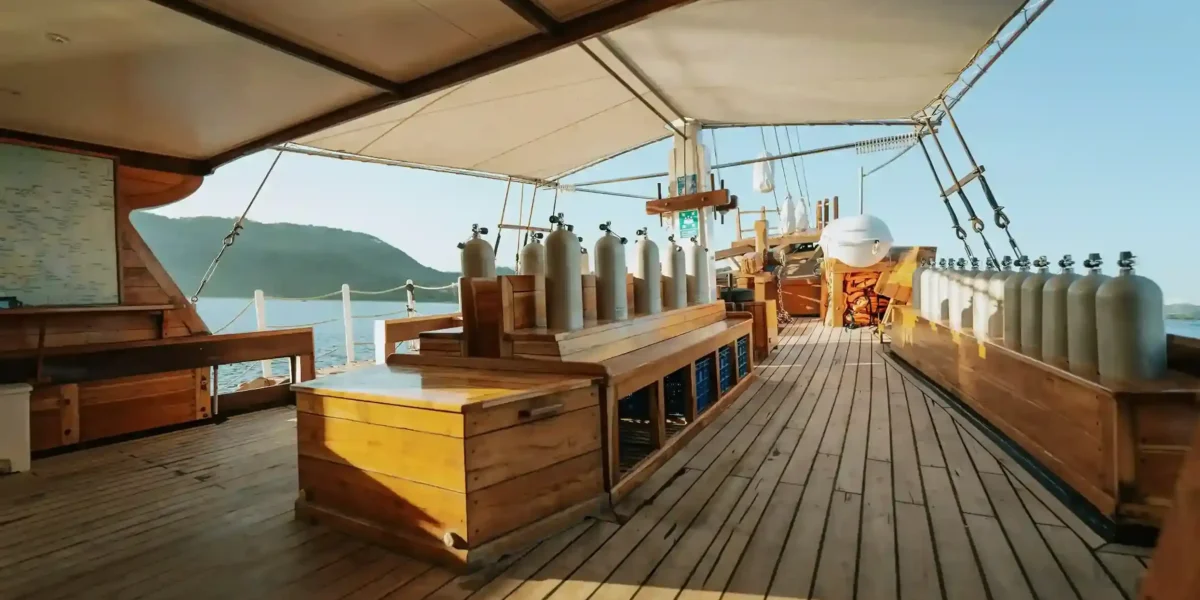
- Check that safety equipment is available and accessible
- Follow crew instructions at all times
- Understand that delays or route changes may happen for safety reasons
- Avoid judging safety based on appearance alone
- Choose operators who are transparent about safety procedures
With this understanding, travelers can sail with greater confidence—not because of promises, but because of systems and decisions that prioritize safety.
Safety Built on Experience and Responsibility
At Komodo Luxury, safety is at the core of every voyage. Our boats are maintained regularly and operated by experienced captains and crews who understand the unique conditions of Komodo waters and are prepared to adjust plans based on real conditions.
Every journey is planned with careful consideration of weather, vessel readiness, and guest comfort—including the willingness to delay or change plans when safety requires it.
If you have questions or would like to plan a sailing experience with us, our team is always happy to help you enjoy a safe, comfortable, and memorable journey in Komodo National Park.