

Nadar com os gigantes


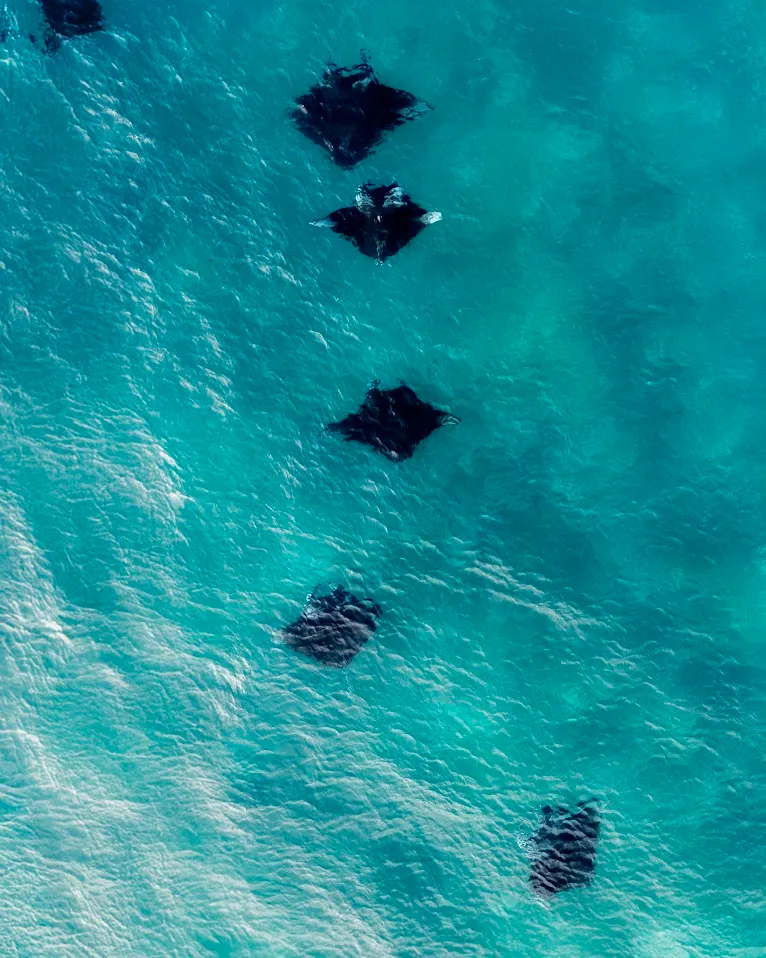
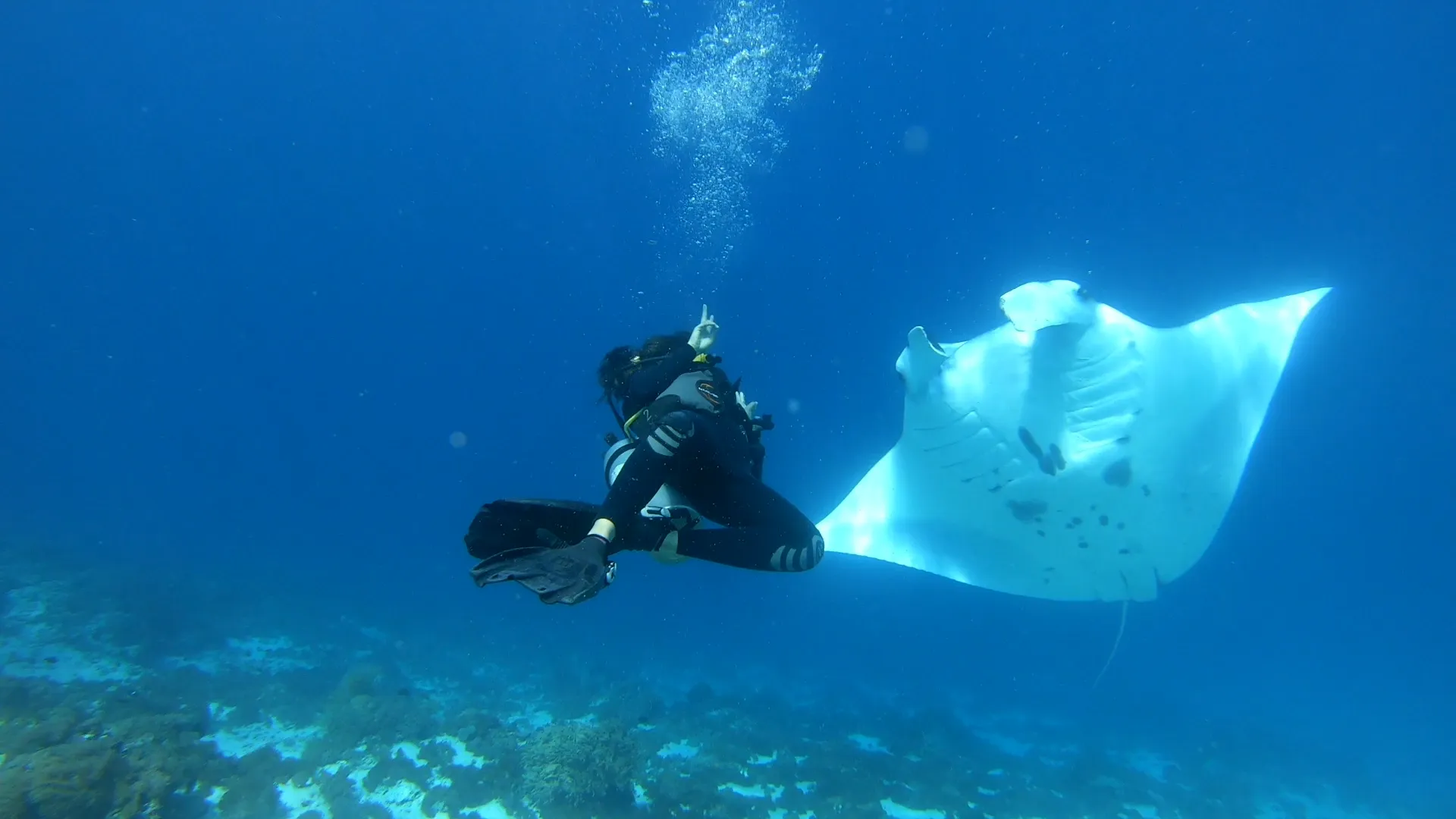
| What it is | Karang Makassar — a kilometers-long shallow reef bank in the channel east of Komodo Island |
|---|---|
| Depth | Rubble-and-sand plateau in roughly 5–15 m of water |
| Acesso | ±1.5 hr by speedboat from Labuan Bajo; minutes from Taka Makassar |
| Época | Sightings year-round; largest feeding aggregations December–March |
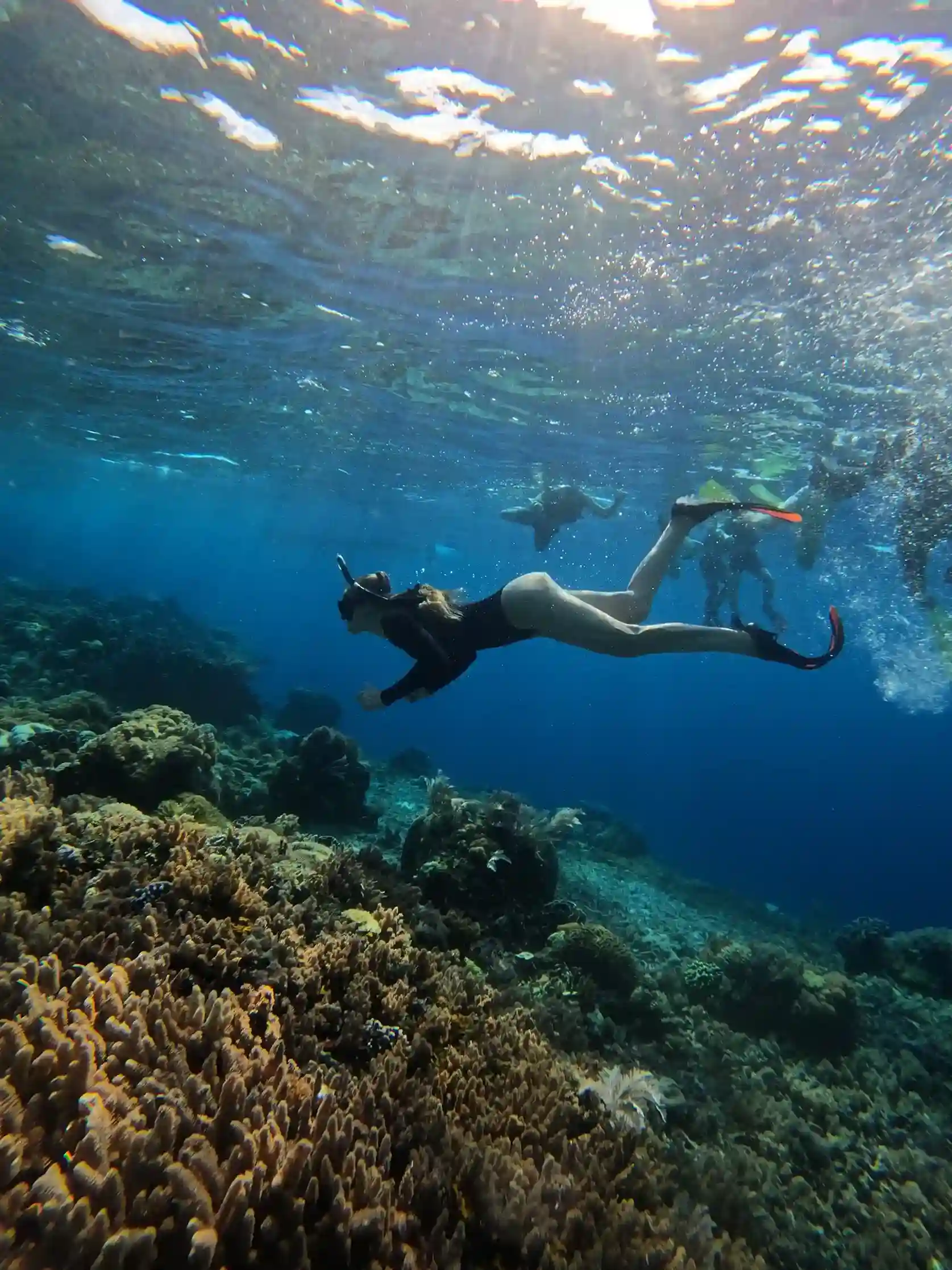
| Formato | Drift by snorkel or scuba; guides read the tide and set the line |
| Full positions | See our Komodo National Park map |
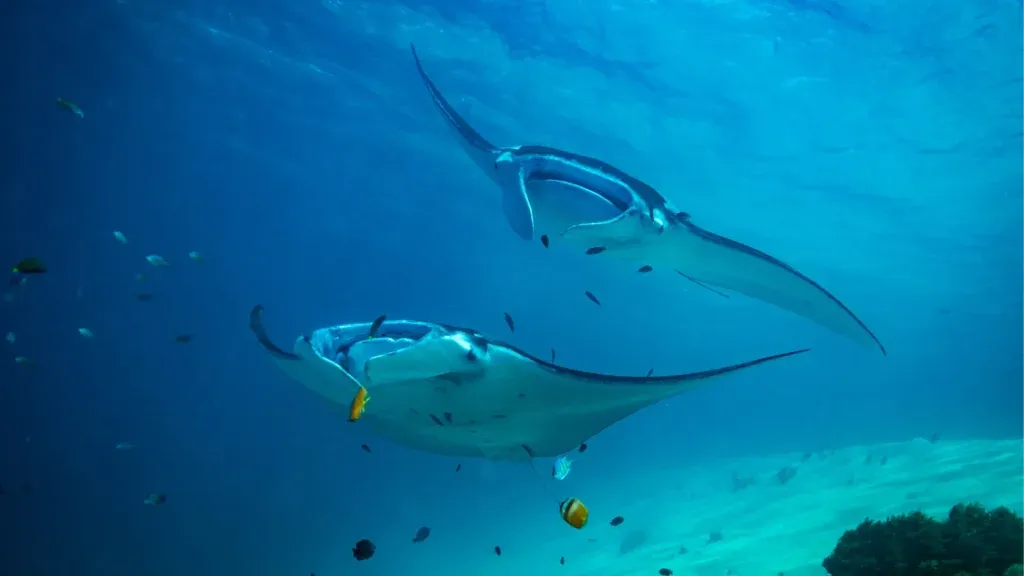
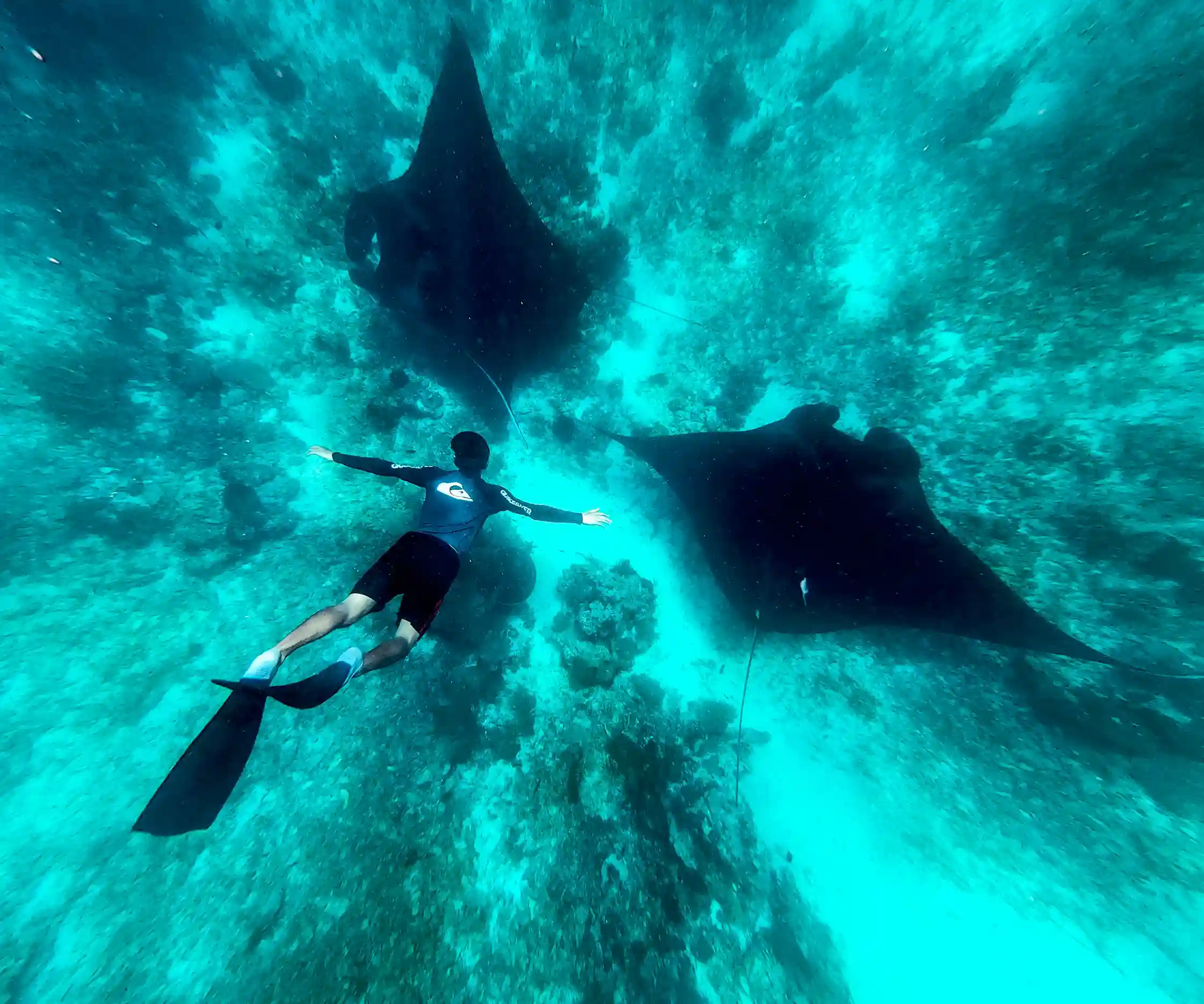
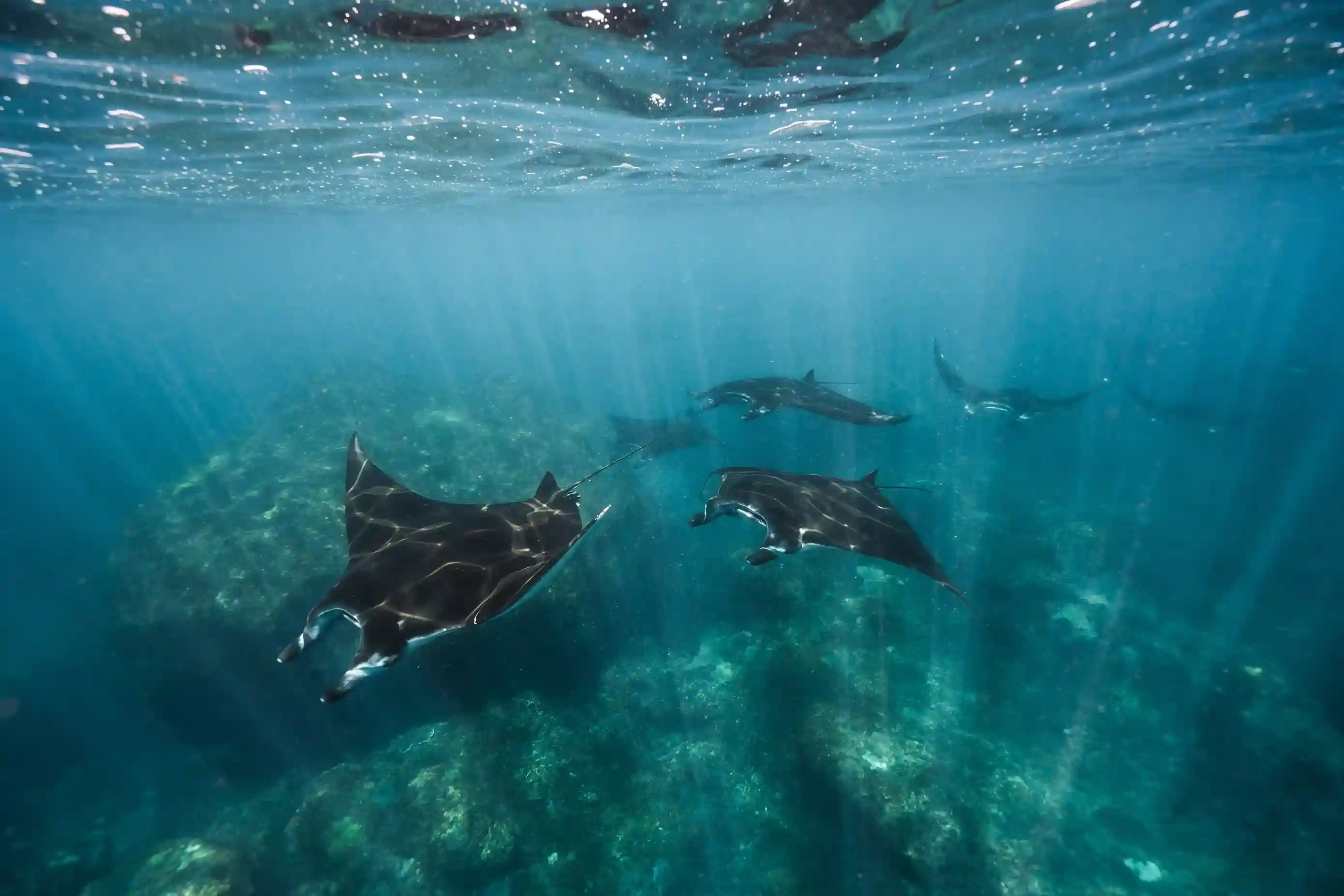
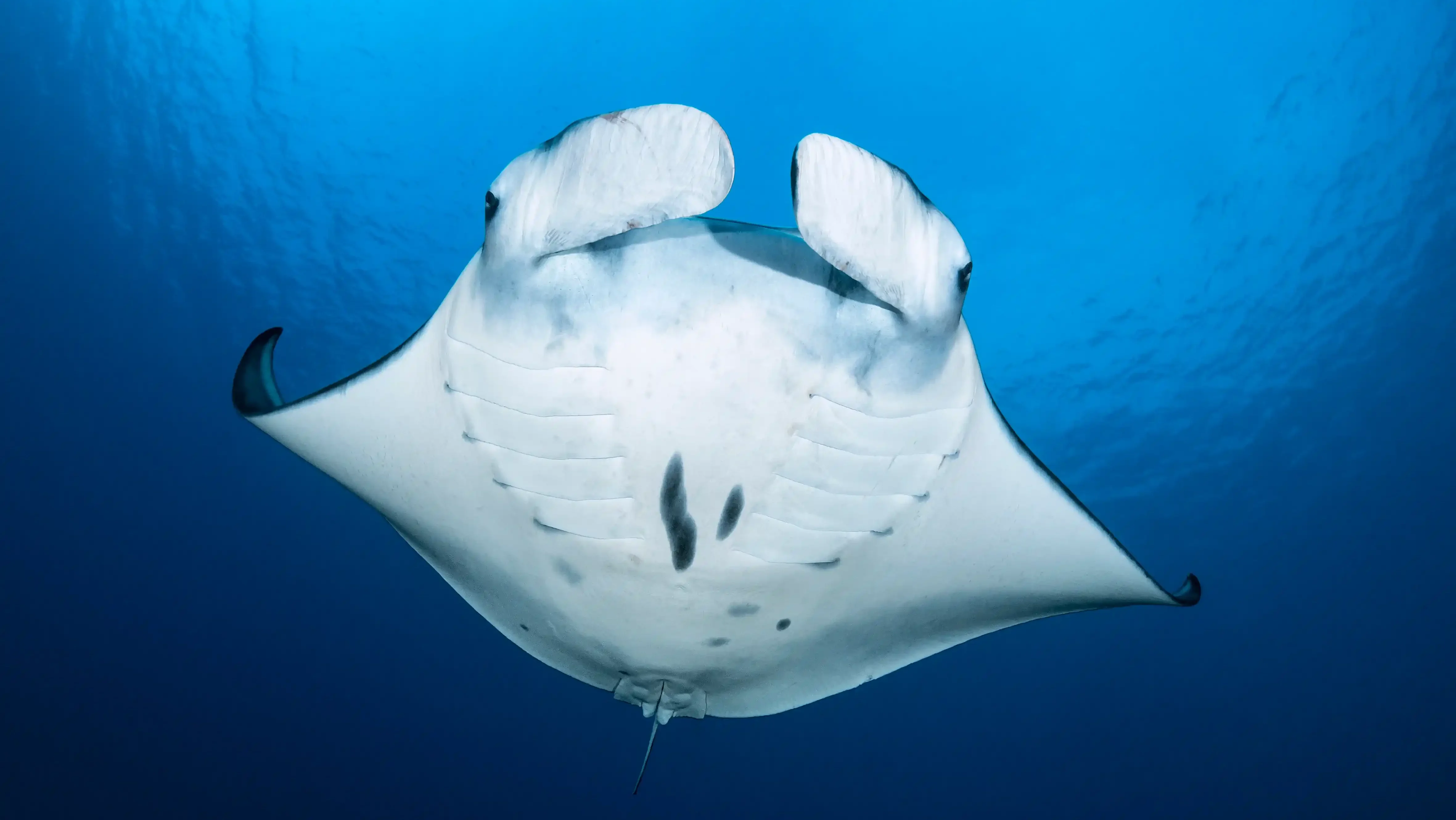
The mantas of Karang Makassar are reef manta rays, Mobula alfredi — filter feeders with wingspans commonly in the 3–4 m range, no barb and no teeth of concern. Each carries a unique pattern of spots on its belly, which is how researchers photo-identify individuals; Komodo’s protected waters are one of Indonesia’s strongholds for the species, and manta rays have been legally protected across Indonesian waters since 2014 — one of the largest manta sanctuaries in the world. They come to the plateau for two services: plankton carried on the tide, and cleaning stations where small wrasse pick their skin and gills clean.
| Fator | Drift snorkel | Scuba dive |
|---|---|---|
| View | Mantas gliding below and rising to the surface to feed | Eye-level at the cleaning stations |
| Skill needed | Confident open-water swimming; fins mandatory | Comfort with drift diving and hook-free buoyancy |
| Best tide | Moderate flow, feeding lines near surface | Slack-to-building tide at the stations |
| Time in water | 20–40 min per drift, repeatable | ±50 min, one pass |
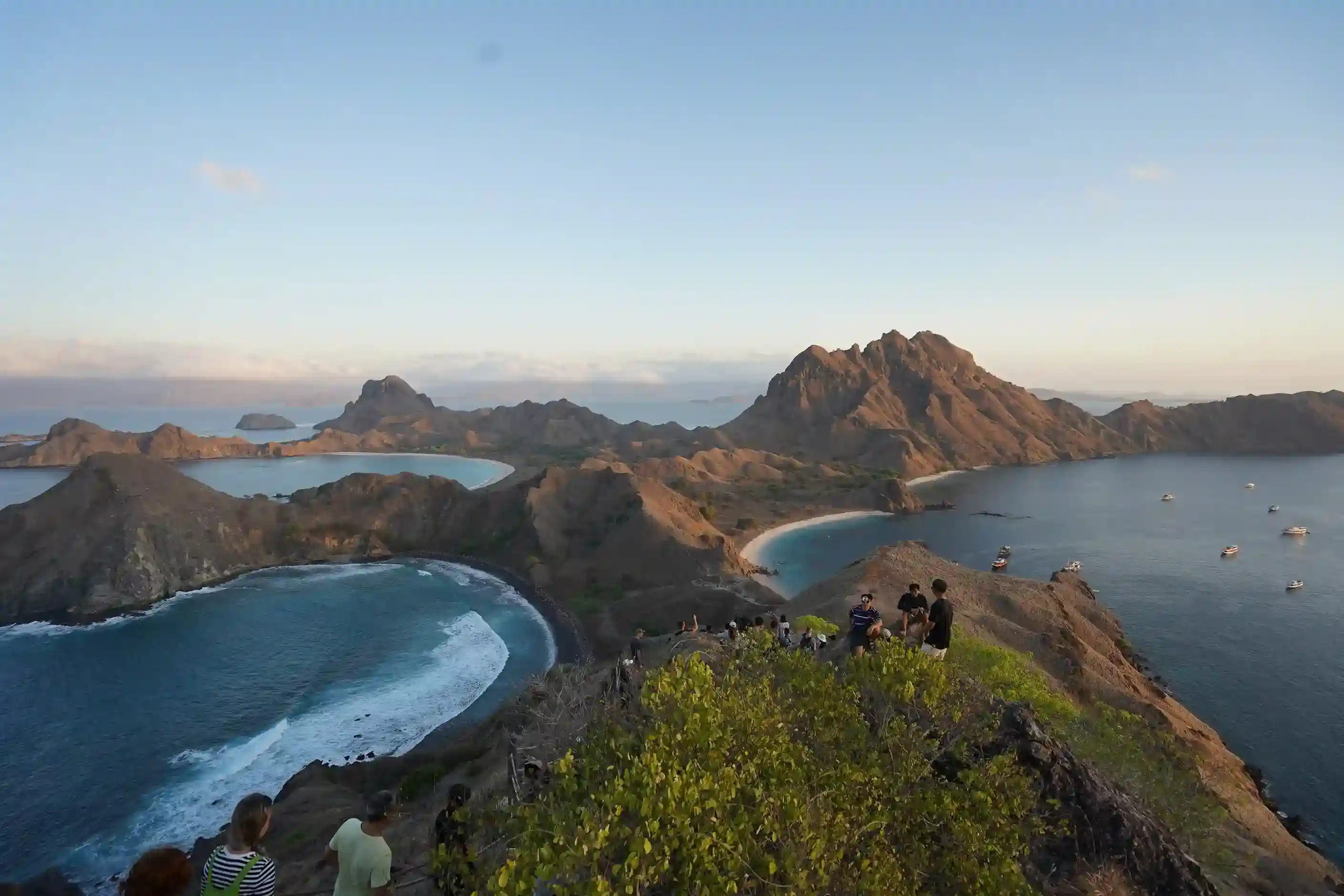
Honest operators say it plainly: Karang Makassar is a wild aggregation site, not an aquarium, and one drift in perfect conditions can still come up empty. The site itself softens the risk — the drift over the rubble bank turns up turtles, eagle rays, reef sharks resting in the rubble and thick snapper schools even on a manta-less pass — and geography does the rest: Taka Makassar is 10–15 minutes away for the surface interval, and a second drift on the next tide window is standard practice on our charters rather than a favor. Over a two- or three-day route the odds compound in your favor; that, more than luck, is why liveaboard guests almost always leave with their manta. The classic day loop runs Padar viewpoint at first light, Pink Beach mid-morning, Manta Point on the tide, then the sandbar — and snorkelers who want a calmer second water stop finish at Siaba’s turtle seagrass beds.
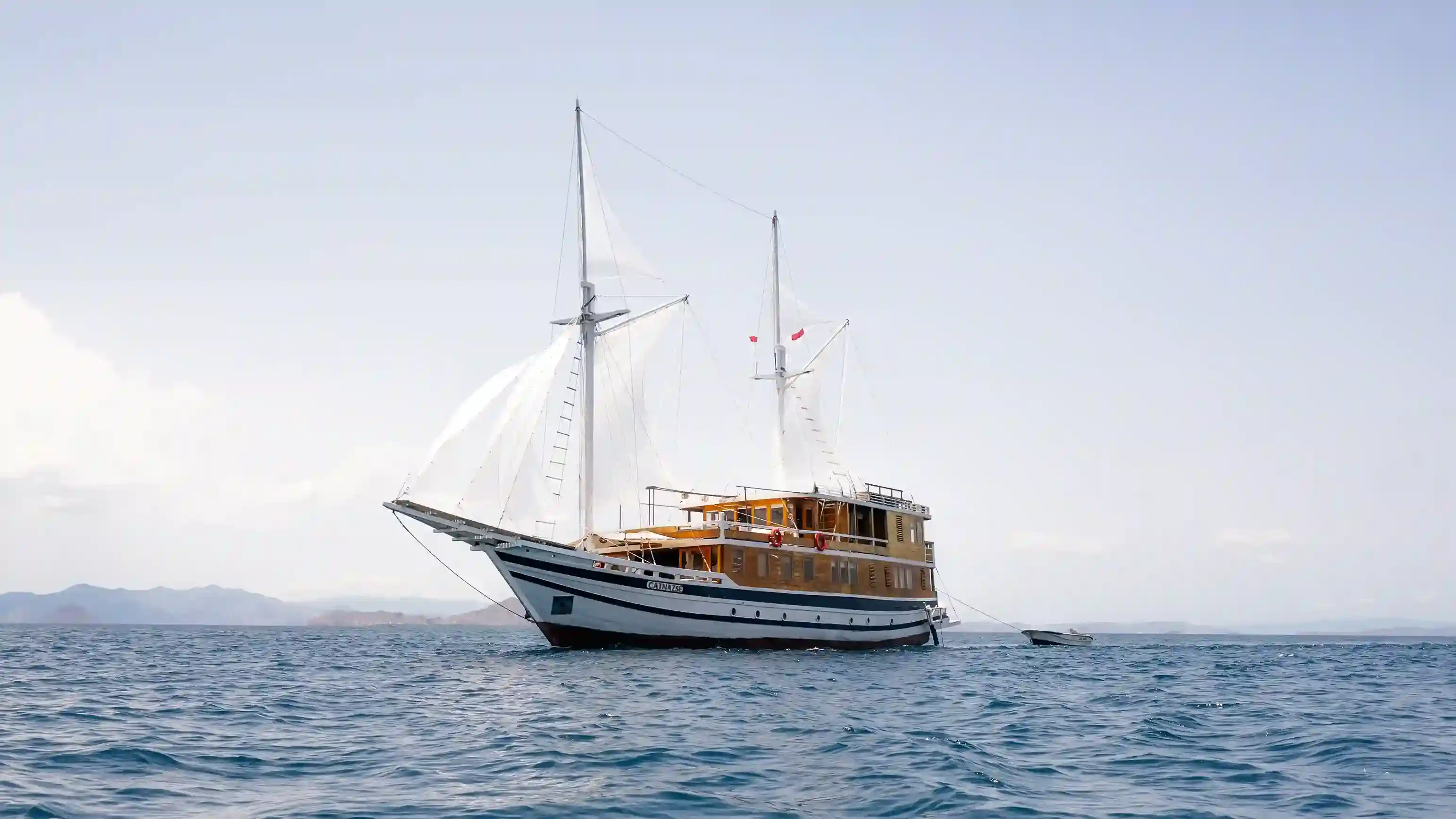
Plan your visit: Komodo Luxury (PT Komodo Bahari Nusantara, sailing Komodo since 2015) operates 9 owned phinisi and works with 200+ vetted partner yachts, rated 4.9/5 by more than 1,500 guests. Message our team on WhatsApp at +62 811-3823-875 or email [email protected] and we will match the right boat and route to your dates.
“Do we get to see sharks and mantas, or only the national park?” is one of the questions we hear most — at Karang Makassar, mantas are resident year-round with the strongest aggregations December to March; see the manta season guide.
Experiências imersivas
Atividade
Mergulhe em recifes imaculados, faça caminhadas em ilhas remotas e observe a vida selvagem durante as nossas viagens de luxo de veleiro.
Viagens Exclusivas
Passeios de luxo personalizados
Itinerários turísticos de luxo exclusivos, concebidos para revelar os destinos e experiências mais exclusivos d Indonésia
Perguntas e Respostas
Não. As raias-manta são animais filtradores inofensivos, sem espinhos venenosos e sem qualquer interesse pelos seres humanos. Muitas vezes, aproximam-se calmamente dos banhistas. A única regra — não as tocar — visa a conservação, não a segurança.
As mantas estão presentes durante todo o ano. Os picos de concentração ocorrem entre setembro e novembro, com outro período de grande afluência entre fevereiro e abril (com menos gente). Entre maio e agosto as condições são boas, embora julho e agosto sejam os meses mais movimentados.
De manhã cedo (antes das 9h) é a melhor altura — há menos barcos e o mar está mais calmo. Os passeios privados podem aceder ao local mais cedo para uma experiência mais tranquila.
Normalmente, observam-se entre 2 e 6 mantas por visita. Durante os meses de maior afluência, é possível avistar grupos de mais de 10. Os avistamentos são bastante frequentes, mas nunca garantidos.
Sim, para nadadores experientes que se sintam à vontade em águas abertas. Os pais devem avaliar se os filhos estão preparados, e as condições podem ser adaptadas para os hóspedes mais novos.
Não é recomendado se não mergulhar há mais de 12 meses. As correntes podem ser fortes — considere fazer primeiro um mergulho de reciclagem (por exemplo, em Siaba Besar).
Está incluído na maioria dos itinerários de vários dias, mas os percursos são personalizados de acordo com as preferências dos hóspedes, o horário e as condições. Informe-nos com antecedência para que possamos dar prioridade à sua visita.
Manta Point (Karang Makassar) é um local relativamente raso, com profundidades que variam entre aproximadamente 5 metros nas estações de limpeza mais rasas e cerca de 15 metros ao longo do planalto principal. Este perfil raso é uma das características distintivas do local — torna as raias-manta acessíveis tanto a praticantes de snorkeling como a mergulhadores, e a luz da superfície cria condições excecionais para a fotografia subaquática. Não é necessário mergulhar a grande profundidade para viver uma experiência extraordinária em Manta Point .
Sim — a Ilha de Manta Point é um dos poucos destinos do mundo onde é possível avistar raias-manta de forma fiável durante todo o ano. A Ilha de Parque Nacional de Komodo alberga uma população residente de aproximadamente 1 200 raias-manta-dos-recifes, e as águas ricas em nutrientes e as estações de limpeza de Karang Makassar atraem-nas de forma consistente em todas as estações do ano. Os picos de agregação ocorrem normalmente entre outubro e junho, sendo que os números mais elevados são frequentemente observados entre novembro e março, quando as águas mais frias e ricas em plâncton atraem as raias-manta para a zona central. Os avistamentos mantêm-se fiáveis ao longo do resto do ano.
Manta Point — officially Karang Makassar — is a 1.5 km drift over a rubble reef where reef manta rays gather to be cleaned, feed and, in season, train in courtship lines. It is the most reliable place in Komodo National Park to swim alongside mantas: boats drop snorkelers or divers up-current and the drift carries you over the cleaning stations. Sightings happen year-round, with the densest aggregations roughly December to February.
Manta Point is a boat-only site on the standard day-trip loop, usually visited right after Taka Makassar. The crew scans for wingtips from the flybridge, positions up-current, and guests drift the site in small groups. Park tickets apply; see current entrance fees.
High by wildlife standards — Karang Makassar is a cleaning-station aggregation site, not a random encounter spot. No operator can honestly promise a sighting, but most days deliver, and crews will make multiple drift passes when needed.
You should be comfortable in open water — it is a drift, so the current does the work while the boat follows the group. Life jackets and guide escort are standard for snorkelers.
Mantas are present all year. The biggest groups are usually seen from about December to February, when plankton-rich water draws feeding trains to the site.