

Nager avec les géants


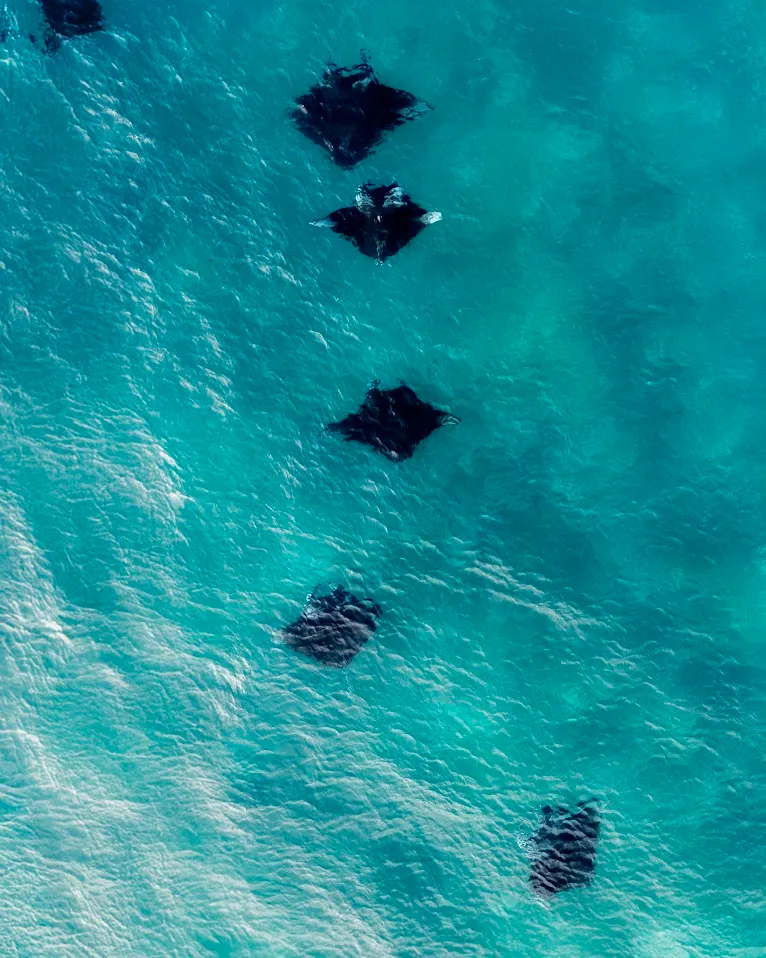
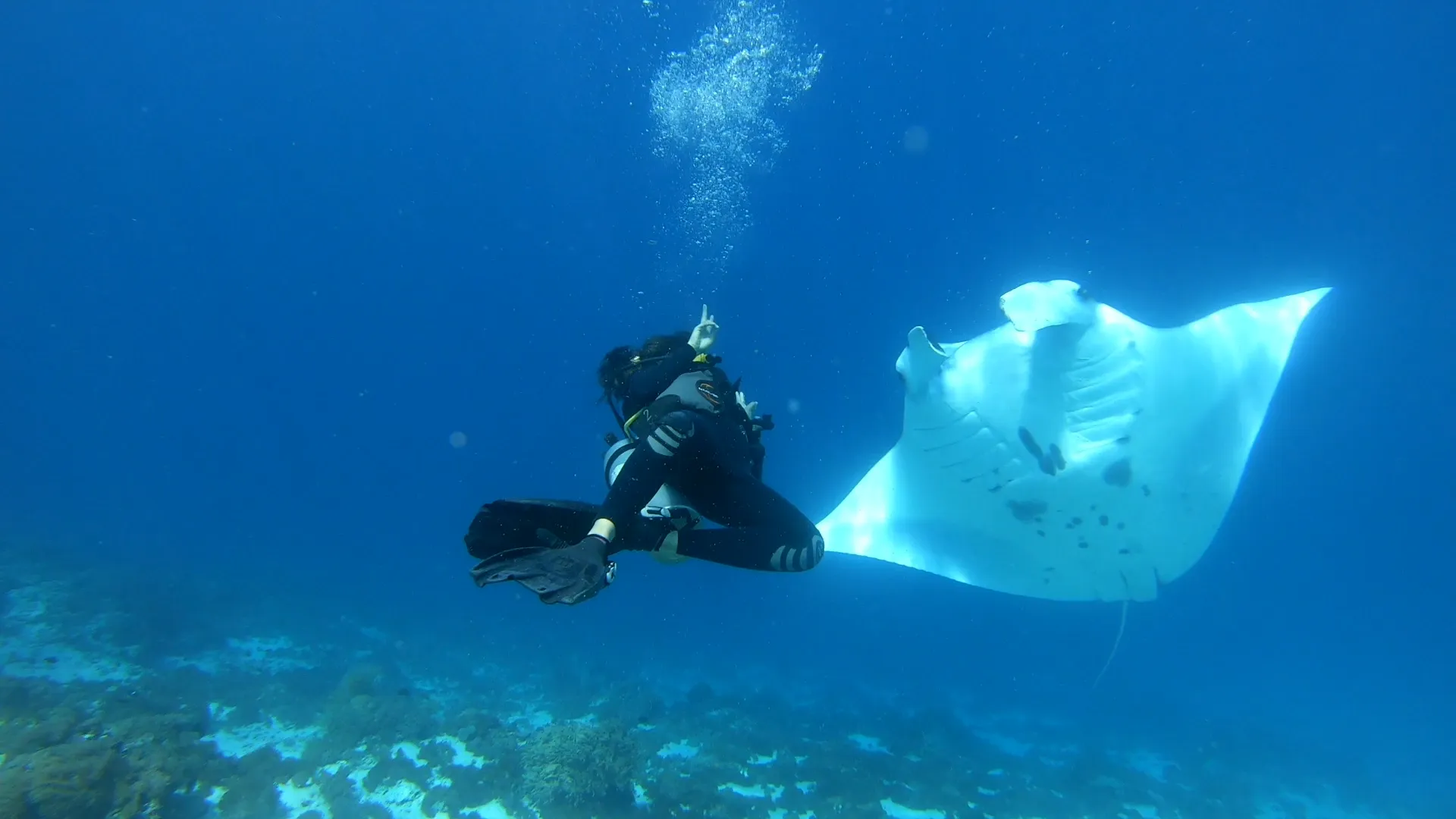
| De quoi s'agit-il ? | Karang Makassar — a kilometers-long shallow reef bank in the channel east of Komodo Island |
|---|---|
| Depth | Rubble-and-sand plateau in roughly 5–15 m of water |
| Accès | ±1.5 hr by speedboat from Labuan Bajo; minutes from Taka Makassar |
| Saison | Sightings year-round; largest feeding aggregations December–March |
| Format | Drift by snorkel or scuba; guides read the tide and set the line |
| Full positions | See our Komodo National Park map |
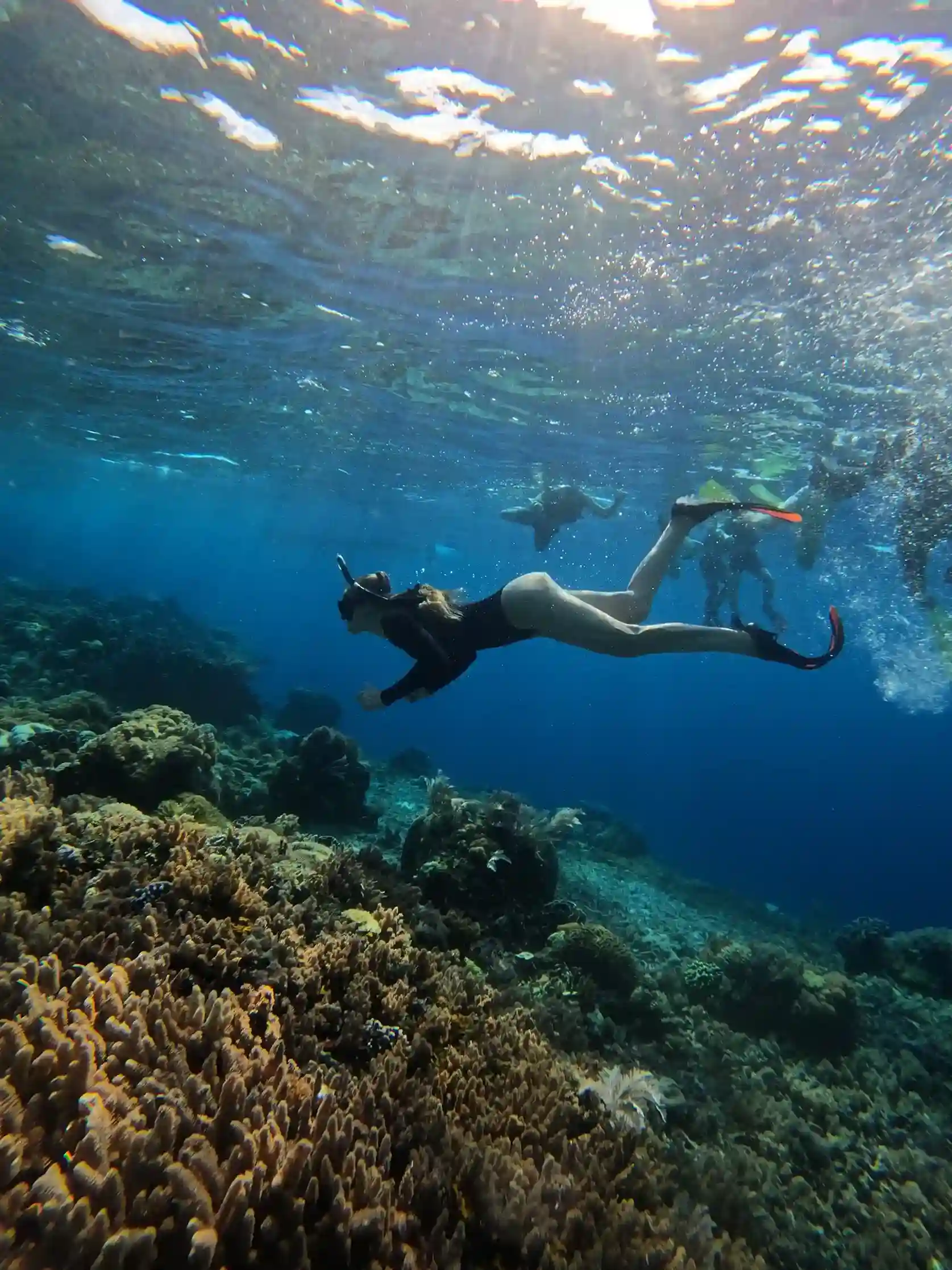
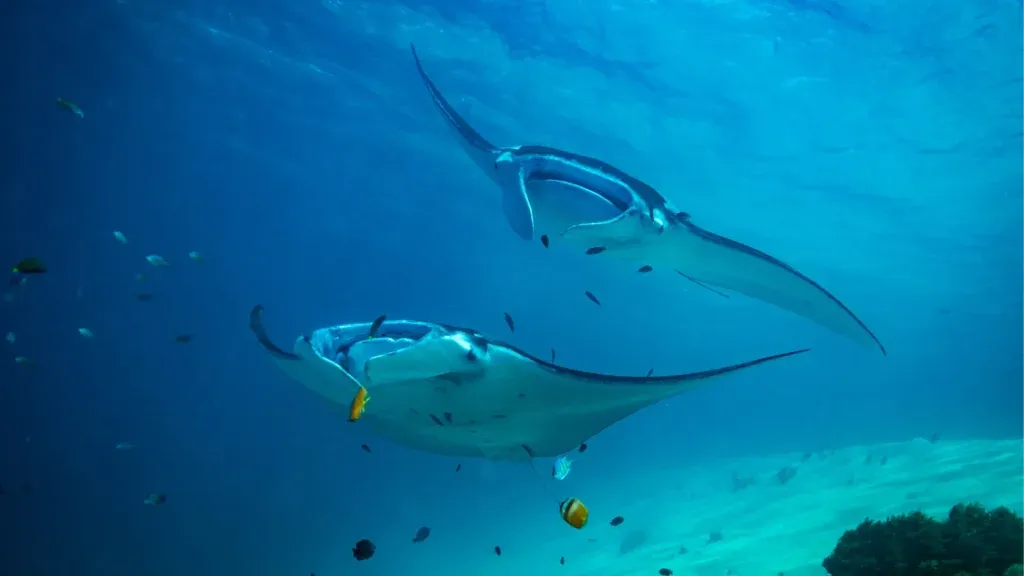
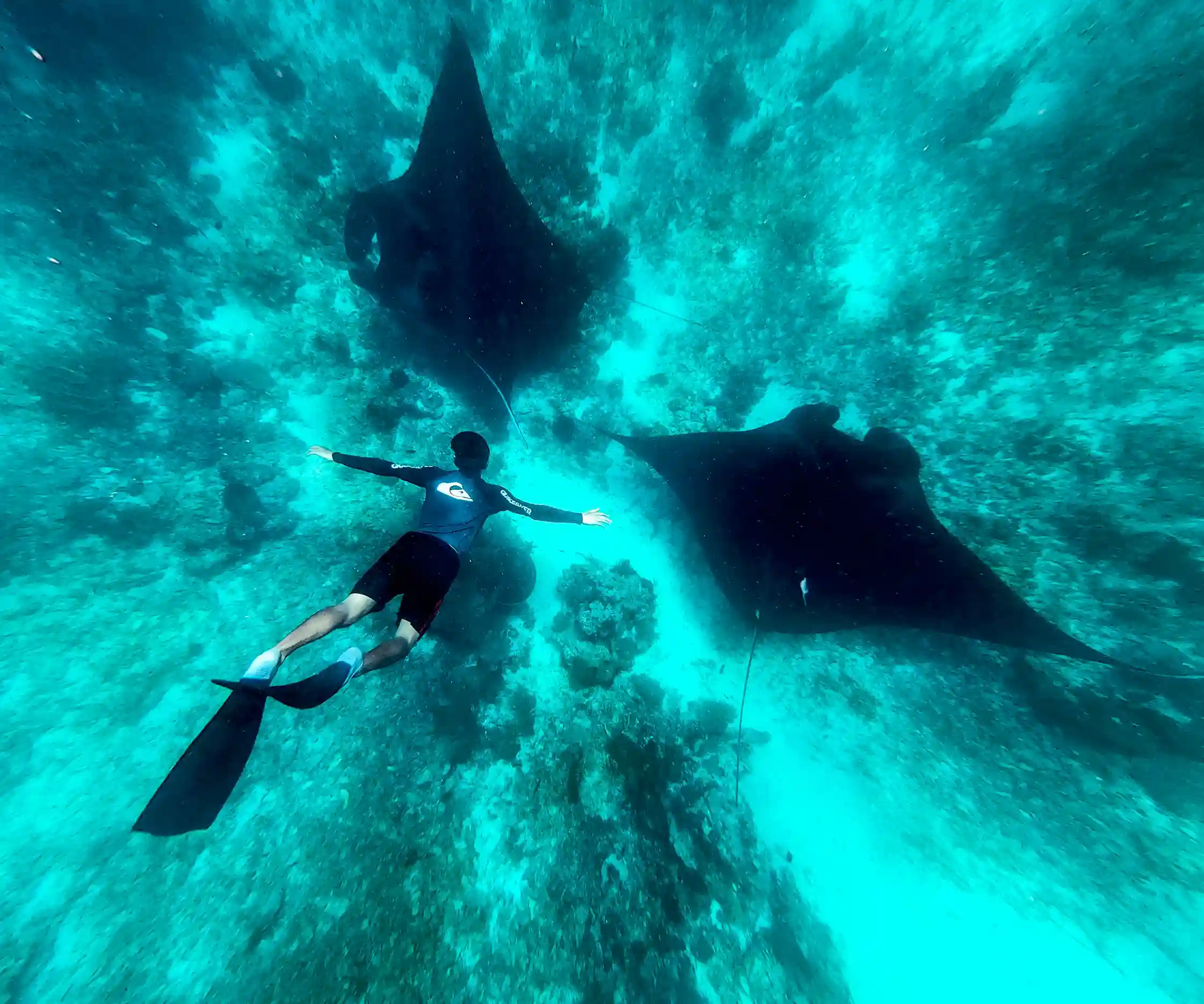
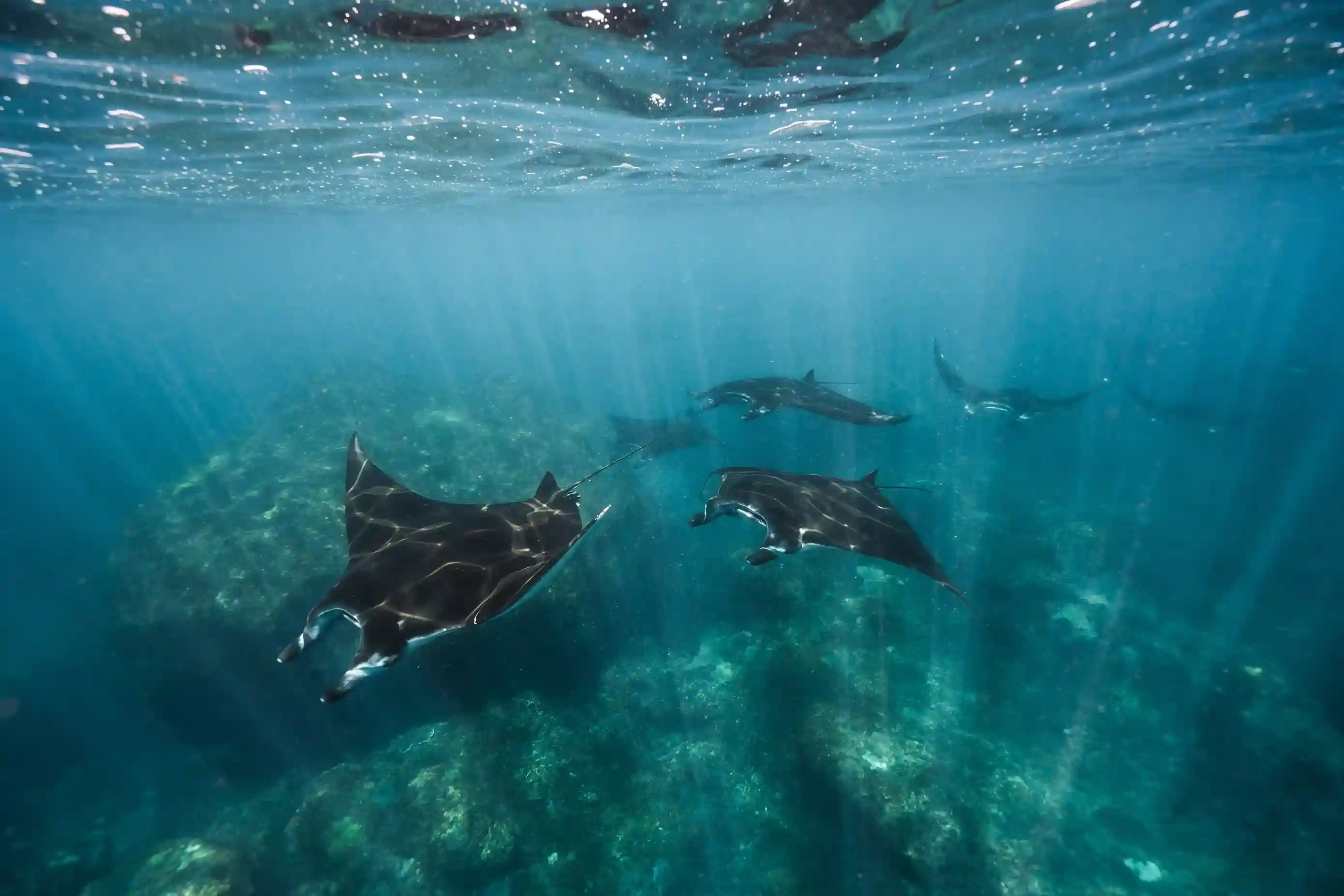
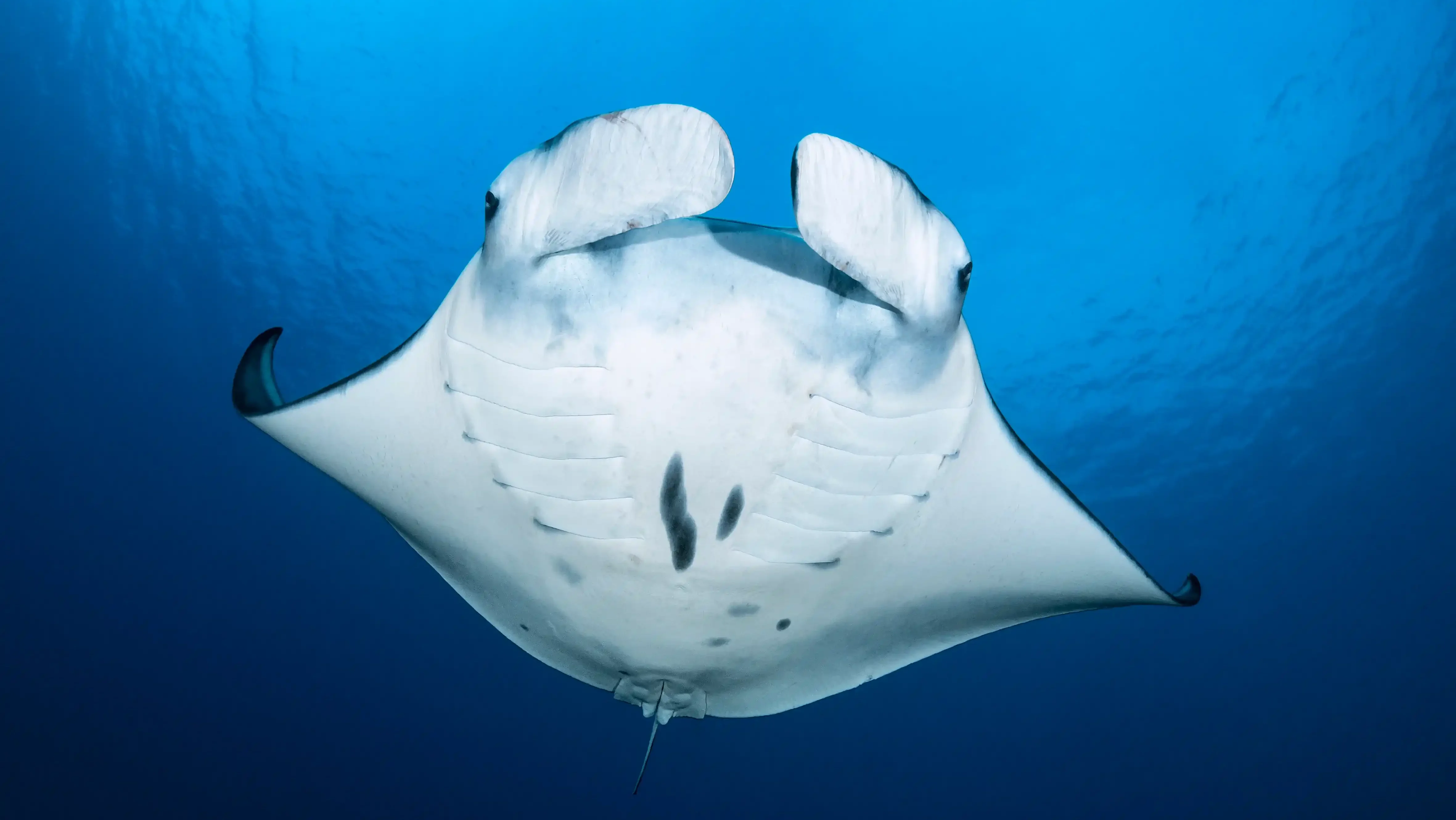
The mantas of Karang Makassar are reef manta rays, Mobula alfredi — filter feeders with wingspans commonly in the 3–4 m range, no barb and no teeth of concern. Each carries a unique pattern of spots on its belly, which is how researchers photo-identify individuals; Komodo’s protected waters are one of Indonesia’s strongholds for the species, and manta rays have been legally protected across Indonesian waters since 2014 — one of the largest manta sanctuaries in the world. They come to the plateau for two services: plankton carried on the tide, and cleaning stations where small wrasse pick their skin and gills clean.
| Facteur | Drift snorkel | Scuba dive |
|---|---|---|
| View | Mantas gliding below and rising to the surface to feed | Eye-level at the cleaning stations |
| Skill needed | Confident open-water swimming; fins mandatory | Comfort with drift diving and hook-free buoyancy |
| Best tide | Moderate flow, feeding lines near surface | Slack-to-building tide at the stations |
| Time in water | 20–40 min per drift, repeatable | ±50 min, one pass |
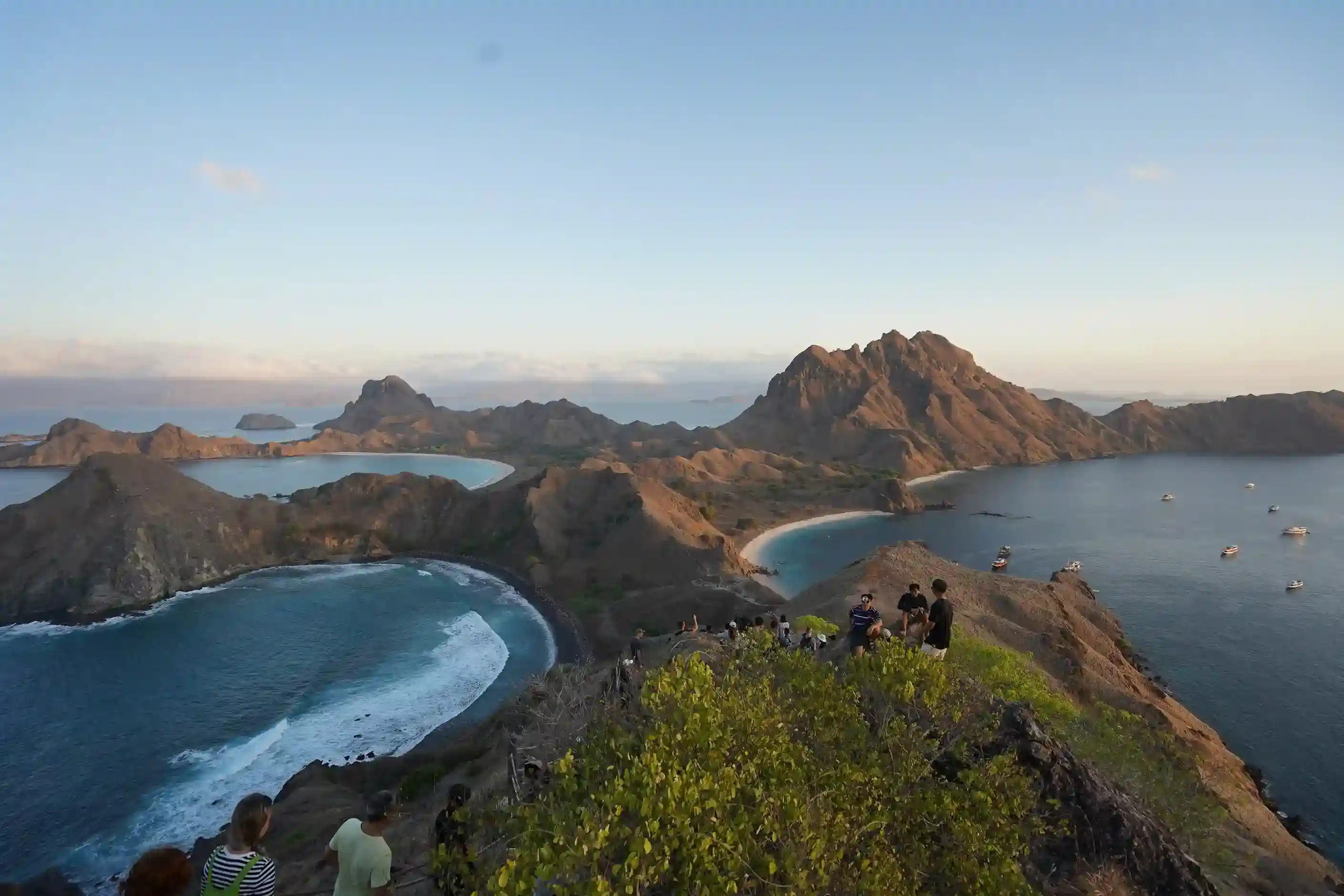
Honest operators say it plainly: Karang Makassar is a wild aggregation site, not an aquarium, and one drift in perfect conditions can still come up empty. The site itself softens the risk — the drift over the rubble bank turns up turtles, eagle rays, reef sharks resting in the rubble and thick snapper schools even on a manta-less pass — and geography does the rest: Taka Makassar is 10–15 minutes away for the surface interval, and a second drift on the next tide window is standard practice on our charters rather than a favor. Over a two- or three-day route the odds compound in your favor; that, more than luck, is why liveaboard guests almost always leave with their manta. The classic day loop runs Padar viewpoint at first light, Pink Beach mid-morning, Manta Point on the tide, then the sandbar — and snorkelers who want a calmer second water stop finish at Siaba’s turtle seagrass beds.
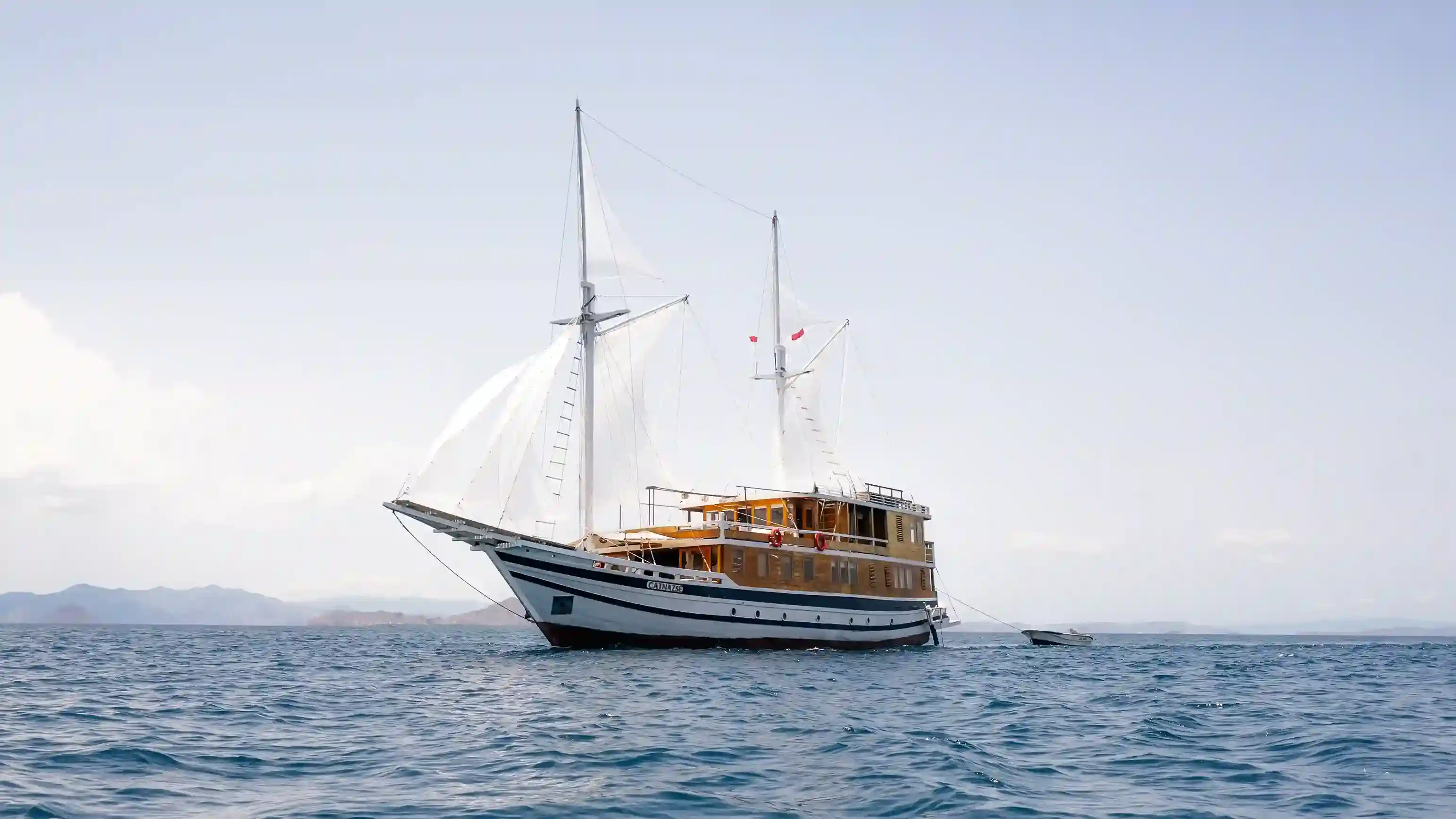
Plan your visit: Komodo Luxury (PT Komodo Bahari Nusantara, sailing Komodo since 2015) operates 9 owned phinisi and works with 200+ vetted partner yachts, rated 4.9/5 by more than 1,500 guests. Message our team on WhatsApp at +62 811-3823-875 or email [email protected] and we will match the right boat and route to your dates.
“Do we get to see sharks and mantas, or only the national park?” is one of the questions we hear most — at Karang Makassar, mantas are resident year-round with the strongest aggregations December to March; see the manta season guide.
Expériences immersives
Activité
Plongez dans des récifs immaculés, partez en randonnée sur des îles isolées et observez la faune sauvage lors de nos croisières de luxe à la voile.
Voyages d'exception
Circuits de luxe sur mesure
Des circuits de luxe sur mesure, conçus pour vous faire découvrir destinations les expériences les plus exclusives Indonésie
Questions et réponses
Non. Les raies manta sont des animaux inoffensifs qui se nourrissent par filtration ; elles n’ont pas d’épines venimeuses et ne s’intéressent pas aux humains. Elles s’approchent souvent des nageurs en toute sérénité. La seule règle à respecter – ne pas les toucher – vise à les protéger, et non à garantir la sécurité.
Les raies manta sont présentes toute l'année. Les rassemblements les plus importants ont lieu de septembre à novembre, avec une autre période propice de février à avril (moins de monde). Les conditions sont bonnes de mai à août, même si c'est en juillet et août qu'il y a le plus de monde.
Le mieux est de venir tôt le matin (avant 9 h) : il y a moins de bateaux et la mer est plus calme. Les bateaux privés peuvent accéder au site plus tôt pour profiter d'une expérience plus tranquille.
En général, on observe entre 2 et 6 raies manta par sortie. Pendant la haute saison, il est possible d'en voir des groupes de plus de 10 individus. Les observations sont très fréquentes, mais ne sont jamais garanties.
Oui, pour les nageurs confirmés qui se sentent à l'aise en eau libre. Les parents doivent évaluer si leur enfant est prêt, et les conditions peuvent être adaptées pour les plus jeunes.
Déconseillé si vous n'avez pas plongé depuis plus de 12 mois. Les courants peuvent être forts ; envisagez d'abord une plongée de remise à niveau (par exemple, à Siaba Besar).
Cette activité est généralement incluse dans la plupart des circuits de plusieurs jours, mais les itinéraires sont adaptés en fonction des préférences des clients, du calendrier et des conditions météorologiques. N'hésitez pas à nous en faire part à l'avance afin que nous puissions donner la priorité à votre visite.
Manta Point (Karang Makassar) est un site relativement peu profond, avec des profondeurs allant d'environ 5 mètres au niveau des stations de nettoyage les moins profondes à environ 15 mètres sur le plateau principal. Ce profil peu profond est l'une des caractéristiques distinctives du site : il rend les raies manta accessibles aussi bien aux plongeurs en apnée qu'aux plongeurs sous-marins, et la lumière de surface crée d'exception pour la photographie sous-marine. Il n'est pas nécessaire de plonger en profondeur pour vivre une expérience exceptionnelle Manta Point .
Oui — Manta Point est l'une des rares destinations monde où l'on peut observer des raies manta de manière fiable tout au long de l'année. Parc National de Komodo une population résidente d'environ 1 200 raies manta des récifs, et les eaux riches en nutriments ainsi que les stations de nettoyage de Karang Makassar les attirent régulièrement en toutes saisons. Les rassemblements les plus importants ont généralement lieu d'octobre à juin, les effectifs les plus élevés étant souvent observés de novembre à mars, lorsque les eaux plus fraîches et riches en plancton attirent les raies manta vers la zone centrale. Les observations restent fiables tout au long du reste de l'année.
Manta Point — officially Karang Makassar — is a 1.5 km drift over a rubble reef where reef manta rays gather to be cleaned, feed and, in season, train in courtship lines. It is the most reliable place in Komodo National Park to swim alongside mantas: boats drop snorkelers or divers up-current and the drift carries you over the cleaning stations. Sightings happen year-round, with the densest aggregations roughly December to February.
Manta Point is a boat-only site on the standard day-trip loop, usually visited right after Taka Makassar. The crew scans for wingtips from the flybridge, positions up-current, and guests drift the site in small groups. Park tickets apply; see current entrance fees.
High by wildlife standards — Karang Makassar is a cleaning-station aggregation site, not a random encounter spot. No operator can honestly promise a sighting, but most days deliver, and crews will make multiple drift passes when needed.
You should be comfortable in open water — it is a drift, so the current does the work while the boat follows the group. Life jackets and guide escort are standard for snorkelers.
Mantas are present all year. The biggest groups are usually seen from about December to February, when plankton-rich water draws feeding trains to the site.