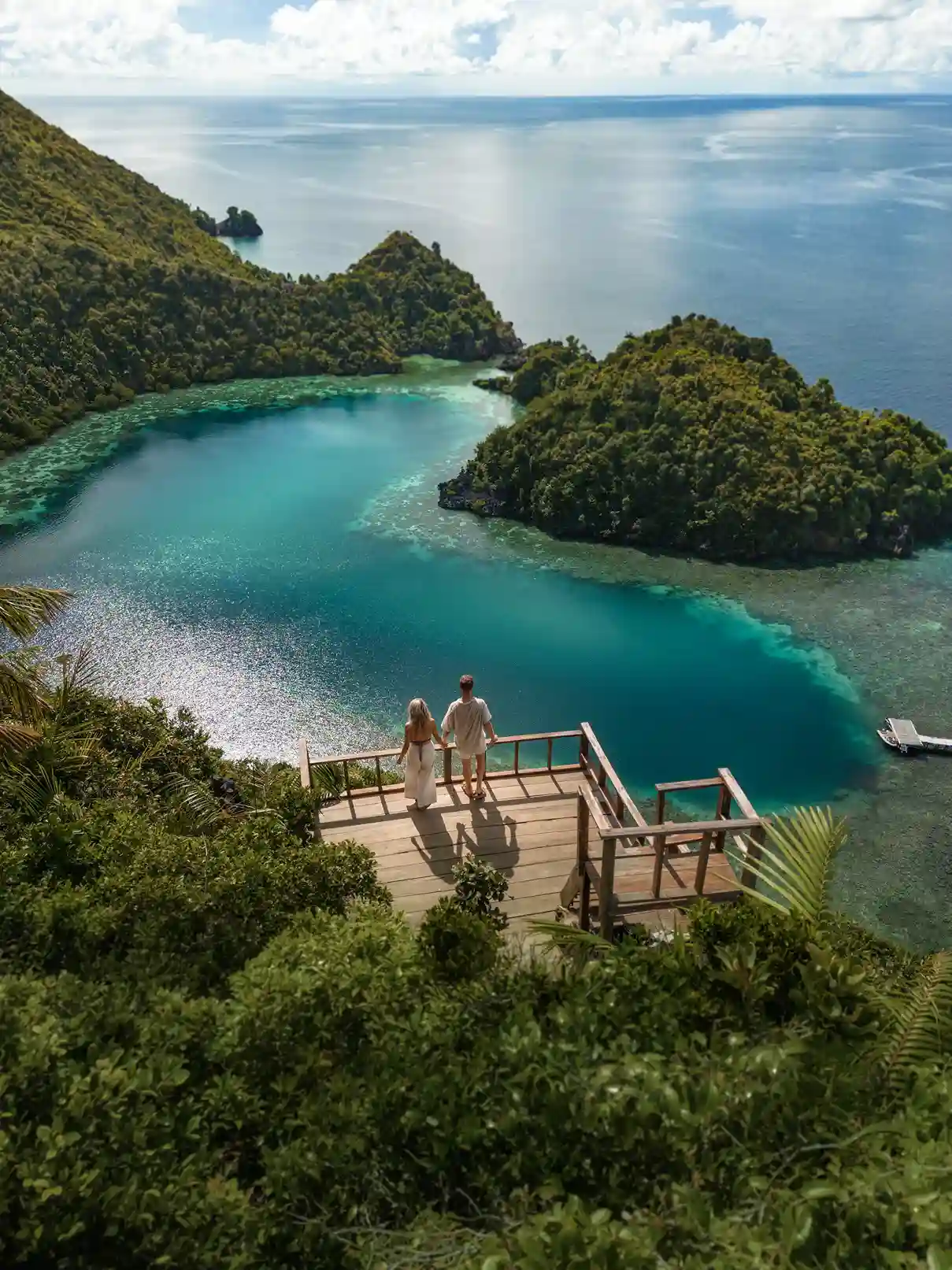


Schwimmen mit den Riesen


| Was ist das? | Karang Makassar — a kilometers-long shallow reef bank in the channel east of Komodo Island |
|---|---|
| Depth | Rubble-and-sand plateau in roughly 5–15 m of water |
| Zugang | ±1.5 hr by speedboat from Labuan Bajo; minutes from Taka Makassar |
| Saison | Sightings year-round; largest feeding aggregations December–March |
| Format | Drift by snorkel or scuba; guides read the tide and set the line |
| Full positions | See our Komodo National Park map |
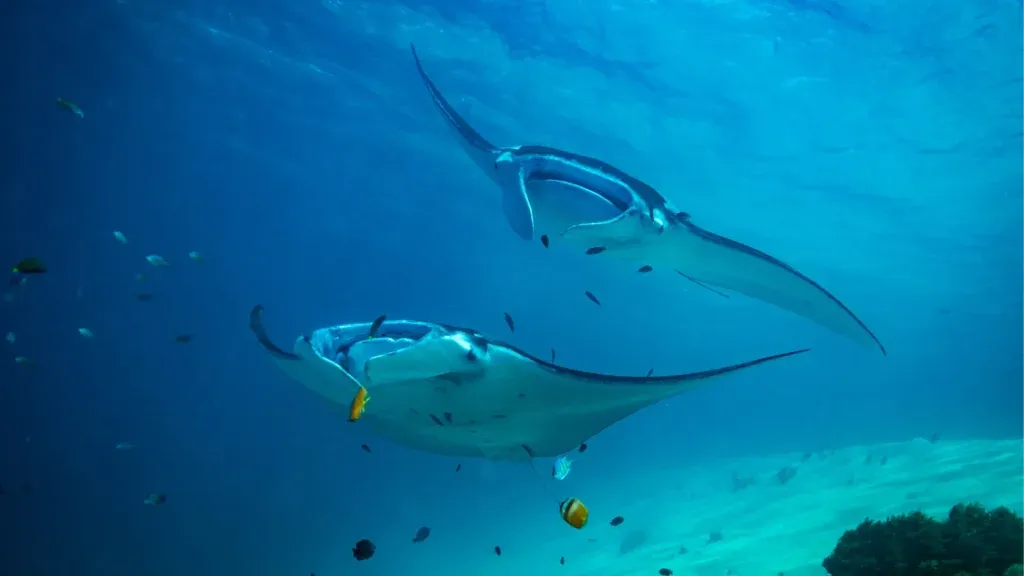
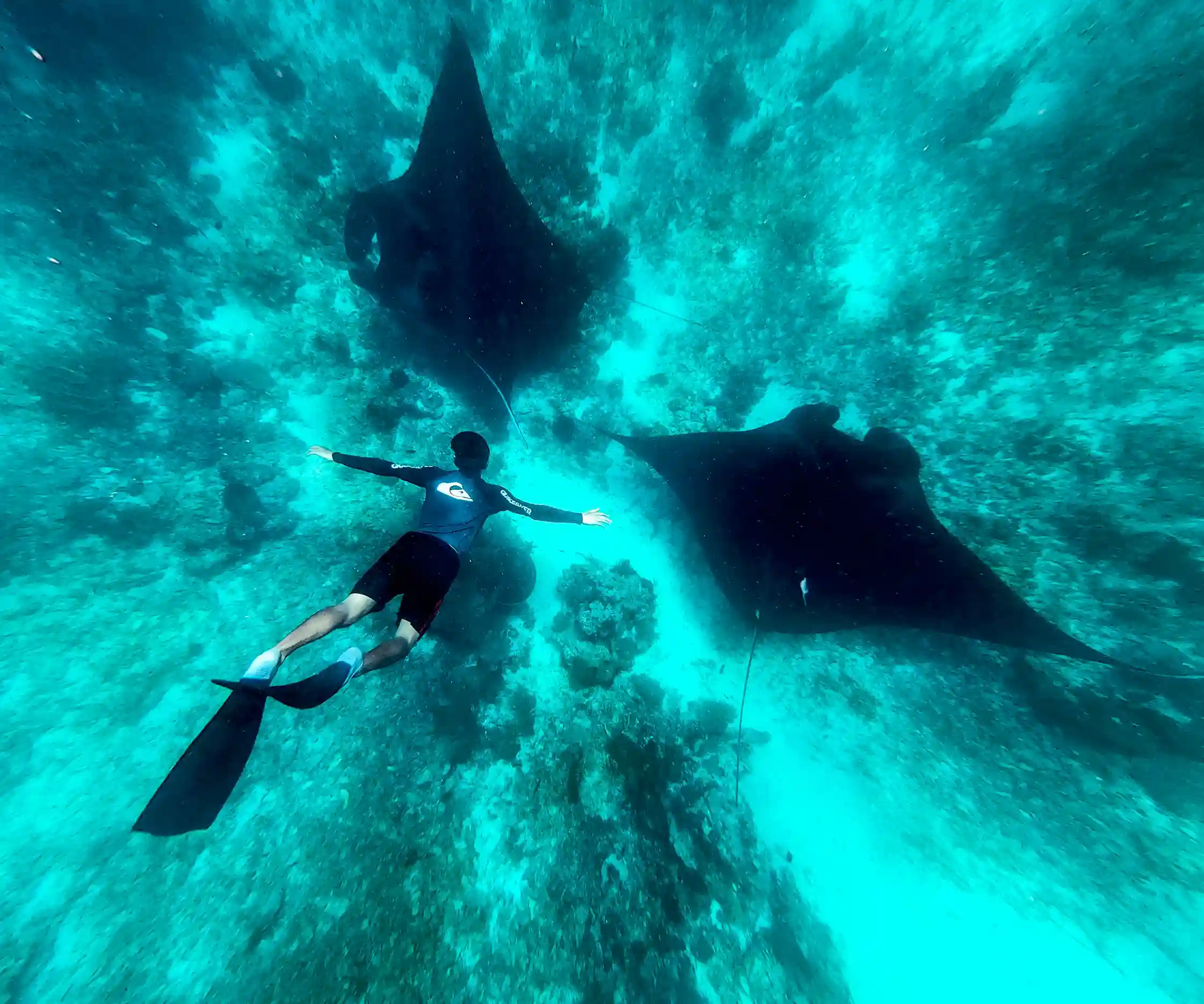
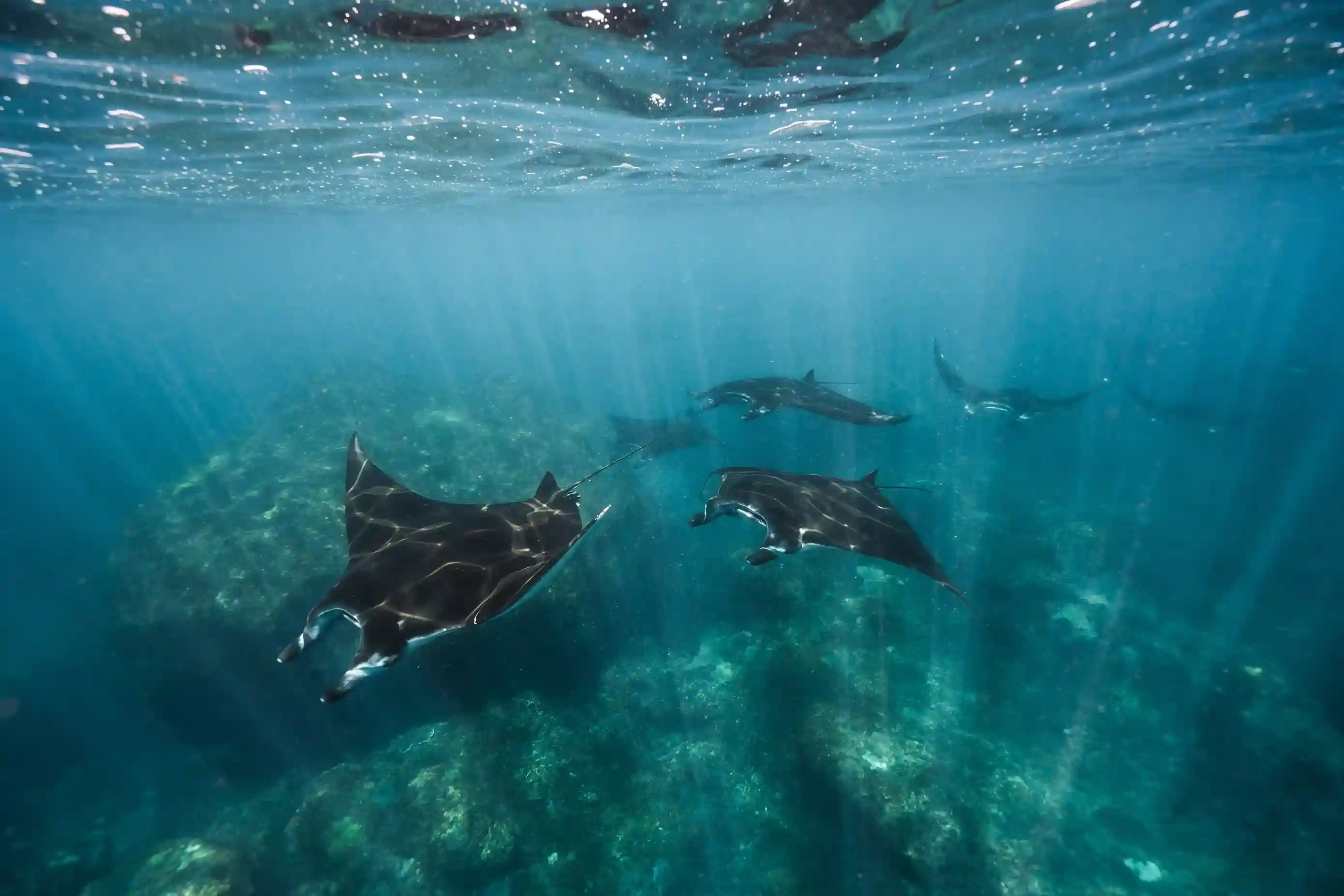
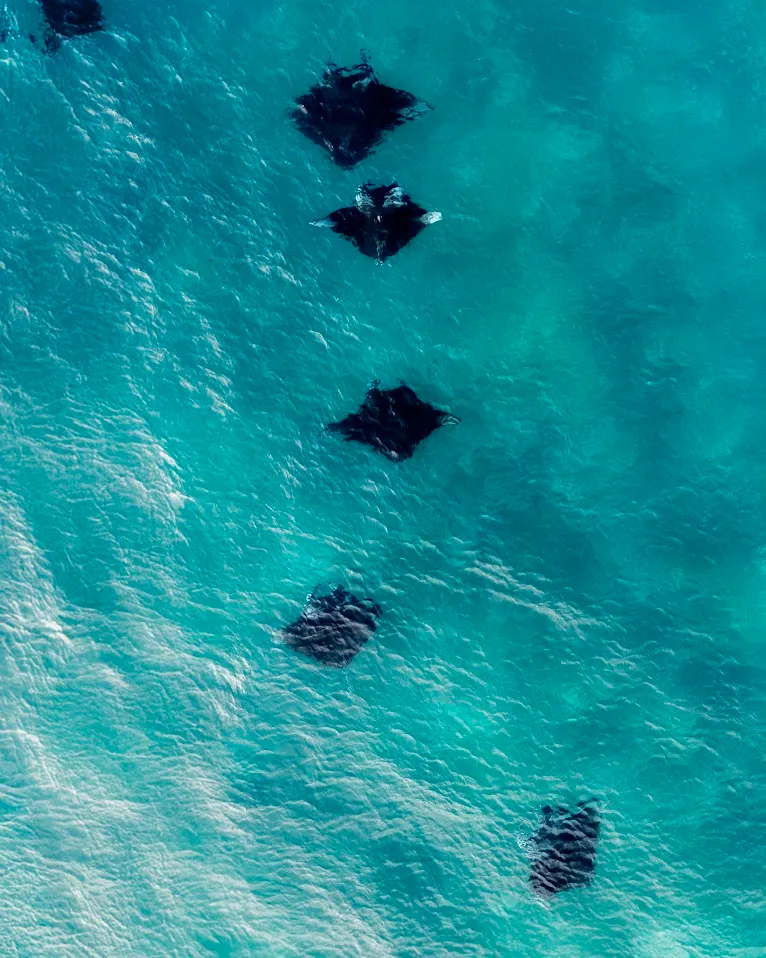
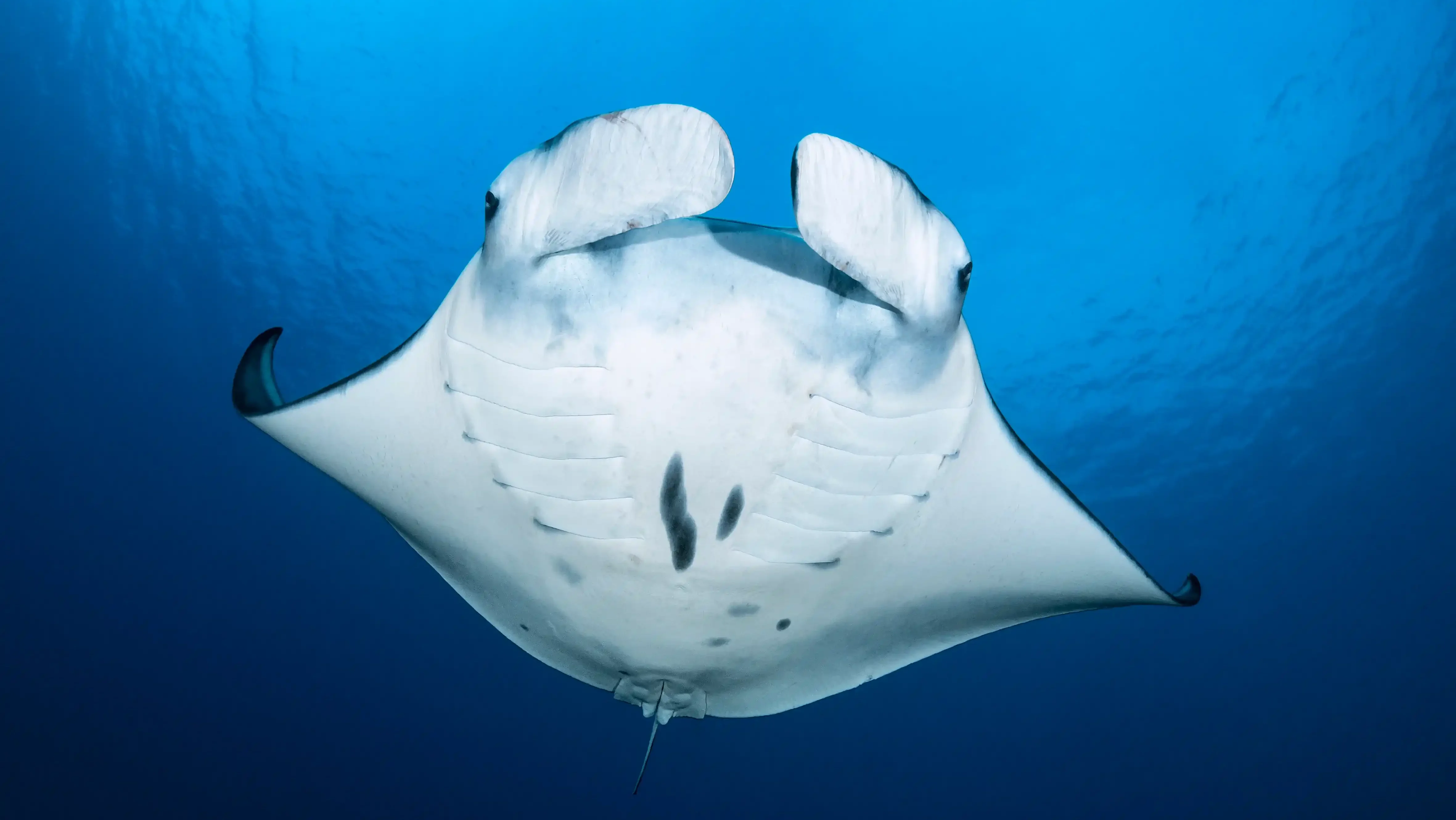
The mantas of Karang Makassar are reef manta rays, Mobula alfredi — filter feeders with wingspans commonly in the 3–4 m range, no barb and no teeth of concern. Each carries a unique pattern of spots on its belly, which is how researchers photo-identify individuals; Komodo’s protected waters are one of Indonesia’s strongholds for the species, and manta rays have been legally protected across Indonesian waters since 2014 — one of the largest manta sanctuaries in the world. They come to the plateau for two services: plankton carried on the tide, and cleaning stations where small wrasse pick their skin and gills clean.
| Faktor | Drift snorkel | Scuba dive |
|---|---|---|
| View | Mantas gliding below and rising to the surface to feed | Eye-level at the cleaning stations |
| Skill needed | Confident open-water swimming; fins mandatory | Comfort with drift diving and hook-free buoyancy |
| Best tide | Moderate flow, feeding lines near surface | Slack-to-building tide at the stations |
| Time in water | 20–40 min per drift, repeatable | ±50 min, one pass |
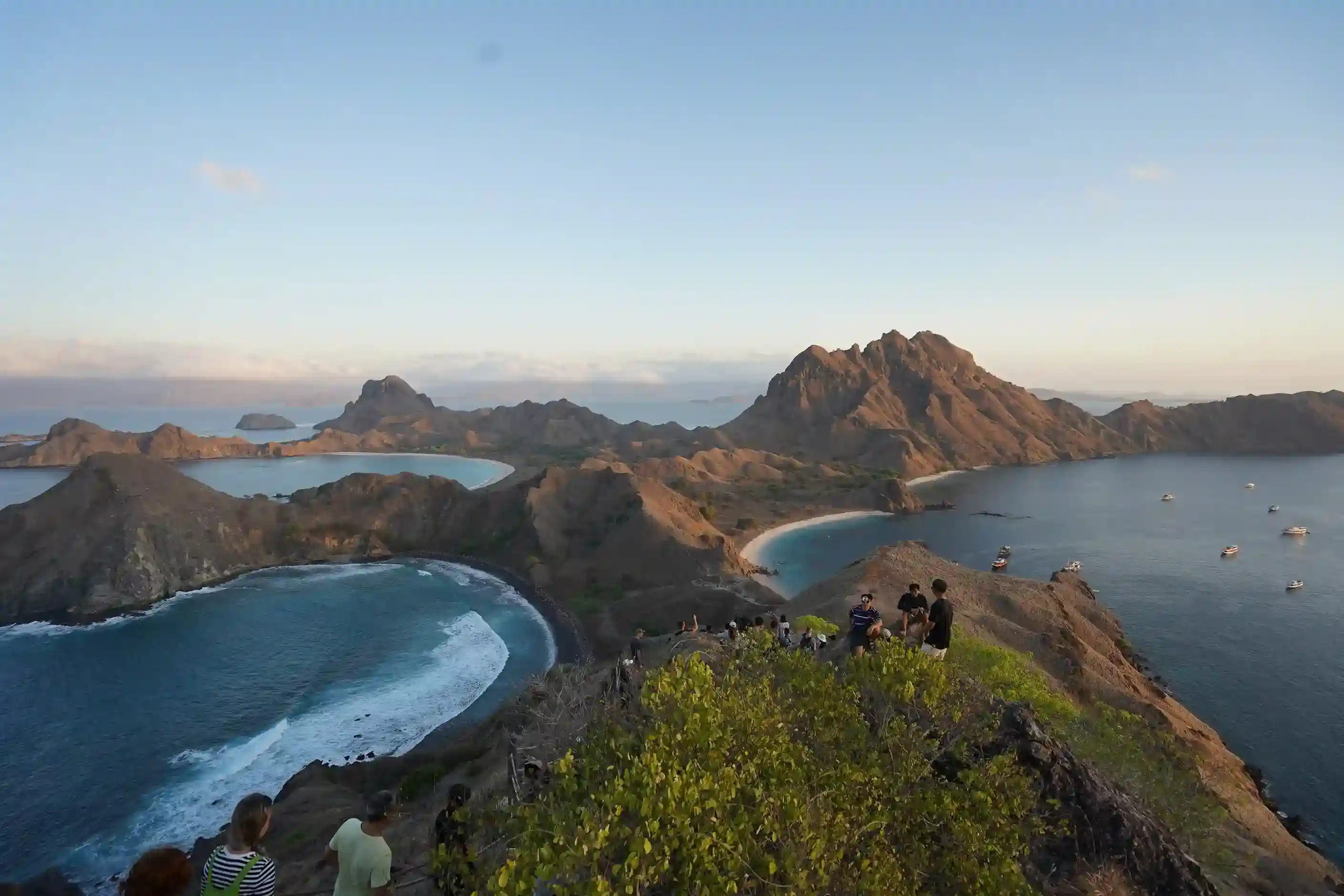
Honest operators say it plainly: Karang Makassar is a wild aggregation site, not an aquarium, and one drift in perfect conditions can still come up empty. The site itself softens the risk — the drift over the rubble bank turns up turtles, eagle rays, reef sharks resting in the rubble and thick snapper schools even on a manta-less pass — and geography does the rest: Taka Makassar is 10–15 minutes away for the surface interval, and a second drift on the next tide window is standard practice on our charters rather than a favor. Over a two- or three-day route the odds compound in your favor; that, more than luck, is why liveaboard guests almost always leave with their manta. The classic day loop runs Padar viewpoint at first light, Pink Beach mid-morning, Manta Point on the tide, then the sandbar — and snorkelers who want a calmer second water stop finish at Siaba’s turtle seagrass beds.
Plan your visit: Komodo Luxury (PT Komodo Bahari Nusantara, sailing Komodo since 2015) operates 9 owned phinisi and works with 200+ vetted partner yachts, rated 4.9/5 by more than 1,500 guests. Message our team on WhatsApp at +62 811-3823-875 or email [email protected] and we will match the right boat and route to your dates.
“Do we get to see sharks and mantas, or only the national park?” is one of the questions we hear most — at Karang Makassar, mantas are resident year-round with the strongest aggregations December to March; see the manta season guide.
Immersive Erlebnisse
Tätigkeit
Tauchen Sie in unberührten Riffen, erkunden Sie abgelegene Inseln und begegnen Sie Wildtieren während unserer luxuriösen Segeltörns.
Signature-Reisen
Kuratierte Luxusreisen
Exklusive Luxusreisen, die darauf zugeschnitten sind, Indonesien exklusivste exklusiv und Erlebnisse zu entdecken
Fragen und Antworten
Nein. Mantarochen sind harmlose Planktonfresser ohne giftige Stacheln und ohne Interesse an Menschen. Oft nähern sie sich Schwimmern ganz ruhig. Die einzige Regel – sie nicht anzufassen – dient dem Artenschutz, nicht der Sicherheit.
Mantas sind das ganze Jahr über anzutreffen. Die größte Ansammlung findet von September bis November statt, mit einem weiteren guten Zeitraum von Februar bis April (weniger Besucher). Von Mai bis August herrschen gute Bedingungen, wobei es im Juli und August am stärksten frequentiert ist.
Am besten ist es am frühen Morgen (vor 9 Uhr) – dann sind weniger Boote unterwegs und die See ist ruhiger. Private Charterboote können den Ort früher anlaufen, um ein ruhigeres Erlebnis zu genießen.
In der Regel 2–6 Mantas pro Ausflug. In der Hochsaison sind Gruppen von mehr als 10 Tieren möglich. Sichtungen sind sehr häufig, können jedoch nie garantiert werden.
Ja, für geübte Schwimmer, die sich im offenen Wasser wohlfühlen. Eltern sollten die Bereitschaft ihres Kindes einschätzen; für jüngere Gäste können die Bedingungen angepasst werden.
Nicht empfehlenswert, wenn Sie seit mehr als 12 Monaten nicht mehr getaucht sind. Die Strömungen können stark sein – ziehen Sie zunächst einen Auffrischungs-Tauchgang (z. B. bei Siaba Besar) in Betracht.
Dies ist in den meisten mehrtägigen Touren enthalten, die Routen werden jedoch individuell an die Wünsche der Gäste, den Zeitplan und die Bedingungen angepasst. Bitte geben Sie dies im Voraus an, damit wir Ihrem Besuch Vorrang einräumen können.
Manta Point (Karang Makassar) ist ein relativ flacher Tauchplatz mit Tiefen, die von etwa 5 Metern an den flachsten Reinigungsstationen bis zu rund 15 Metern auf dem Hauptplateau reichen. Dieses flache Profil ist eines der charakteristischen Merkmale des Tauchplatzes – es macht Mantarochen sowohl für Schnorchler als auch für Taucher zugänglich, und das Oberflächenlicht schafft außergewöhnliche Bedingungen für die Unterwasserfotografie. Man muss nicht tief tauchen, um ein herausragendes Manta Point Erlebnis zu haben.
Ja — Manta Point ist eines der wenigen Reiseziele weltweit, an denen Mantas das ganze Jahr über zuverlässig gesichtet werden können. Komodo Nationalpark eine ansässige Population von etwa 1.200 Riffmantas, und die nährstoffreichen Gewässer sowie die Reinigungsstationen von Karang Makassar ziehen sie zu jeder Jahreszeit an. Die größten Ansammlungen treten typischerweise von Oktober bis Juni auf, wobei die höchsten Zahlen oft von November bis März zu verzeichnen sind, wenn kühleres, planktonreiches Wasser die Mantas in die zentrale Zone lockt. Auch während des restlichen Jahres sind Sichtungen zuverlässig.
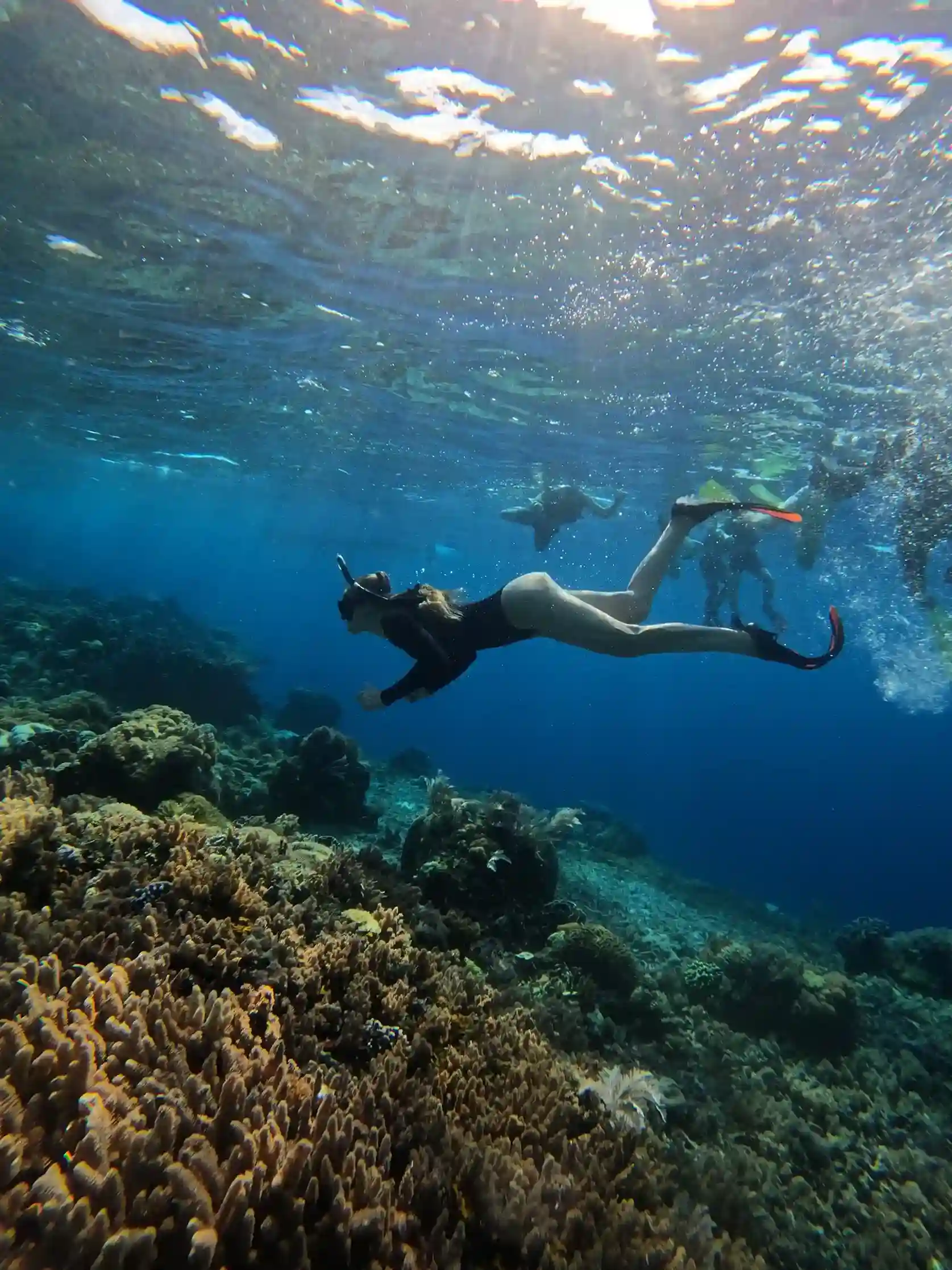
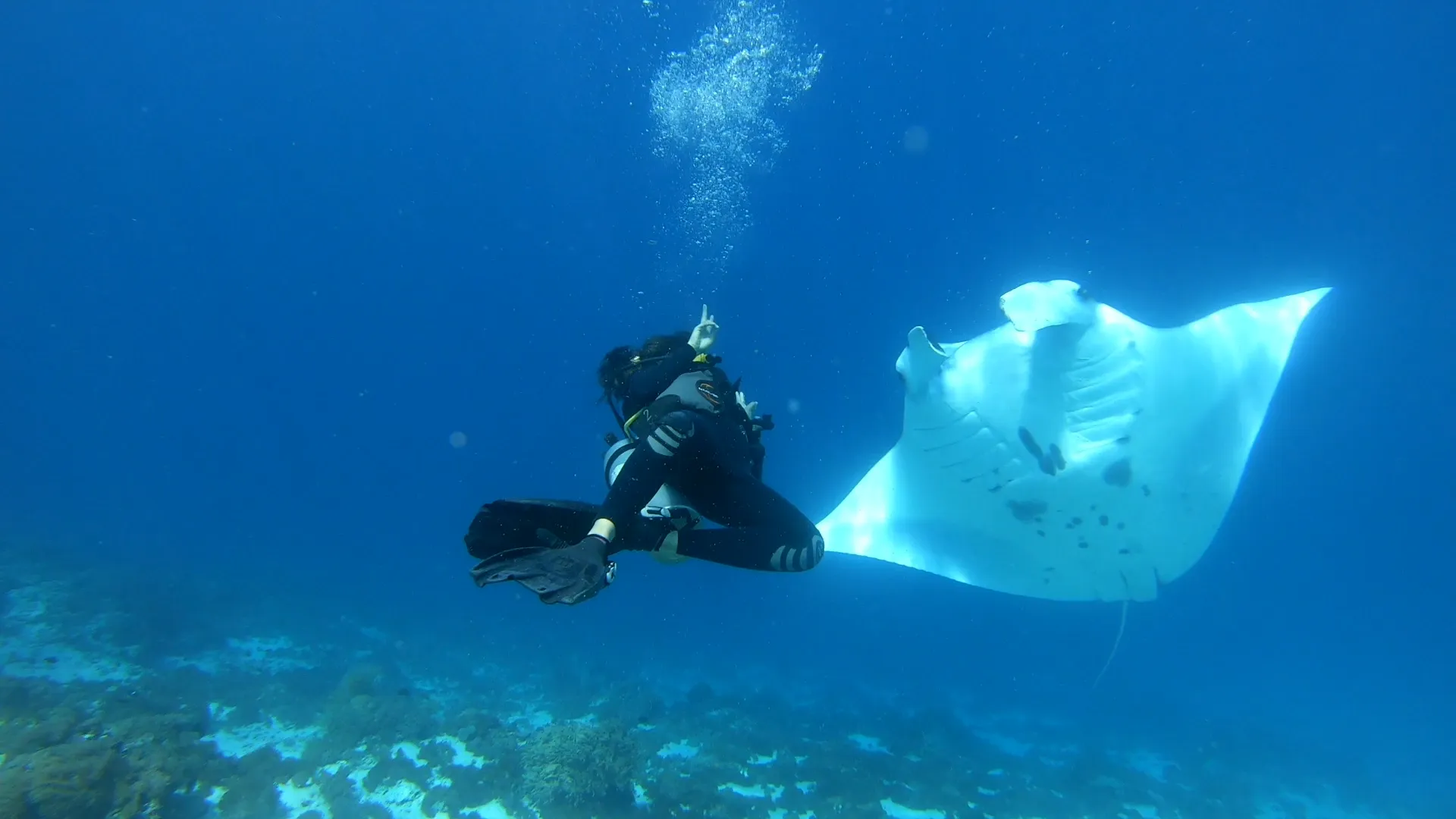
Manta Point — officially Karang Makassar — is a 1.5 km drift over a rubble reef where reef manta rays gather to be cleaned, feed and, in season, train in courtship lines. It is the most reliable place in Komodo National Park to swim alongside mantas: boats drop snorkelers or divers up-current and the drift carries you over the cleaning stations. Sightings happen year-round, with the densest aggregations roughly December to February.
Manta Point is a boat-only site on the standard day-trip loop, usually visited right after Taka Makassar. The crew scans for wingtips from the flybridge, positions up-current, and guests drift the site in small groups. Park tickets apply; see current entrance fees.
High by wildlife standards — Karang Makassar is a cleaning-station aggregation site, not a random encounter spot. No operator can honestly promise a sighting, but most days deliver, and crews will make multiple drift passes when needed.
You should be comfortable in open water — it is a drift, so the current does the work while the boat follows the group. Life jackets and guide escort are standard for snorkelers.
Mantas are present all year. The biggest groups are usually seen from about December to February, when plankton-rich water draws feeding trains to the site.