




Last updated: September 2026 · Prices & availability verified for the 2026/2027 season
Last updated: September 09, 2026
This is the story our guides tell on the crossing from Labuan Bajo, the context behind the ranger-led trek that anchors every itinerary we sail, from 3D2N open trips to private expeditions through Komodo National Park. We’ve been introducing travelers to these living fossils since 2015, and the backstory is stranger than most guests expect: the Komodo dragon, or Varanus komodoensis, is the largest living lizard species on Earth, and most visitors get its evolutionary origin completely wrong. Here’s the full story: where it actually came from, when the West first found out about it, and why it survives nowhere else on the planet.
Das Wichtigste in Kürze
- The Komodo dragon evolved in Australia roughly 4 million years ago, not on the Indonesian islands where it lives today, fossils place it in Flores by around 1.4 million years ago.
- It’s the largest living lizard, reaching up to 3 metres and 150 kg, and an apex predator with a venomous, bacteria-laden bite.
- It shares a common ancestor with Megalania, an extinct 5+ metre Australian giant monitor, but the two are distinct species, not the same lineage.
- Its closest living relative is the lace monitor of eastern Australia.
- It survives today only because Wallacea’s isolation shielded it from the extinctions that wiped out its Australian relatives, with the Padar Island population itself going extinct in the 20th century.
- Western science only documented the species in 1910–1912, though the Manggarai people of Flores had long known and revered it as the ora.
- It’s currently listed as Endangered by the IUCN, protected primarily within Komodo National Park, a UNESCO World Heritage Site since 1991.
- It is not related to dinosaurs, the resemblance is convergent evolution, not shared ancestry.
Komodowaran : Wann wurde er entdeckt?
Although the Komodo dragon has lived for thousands of years in the Lesser Sunda Islands, it wasn’t until the early 20th century that the outside world learned about it. Rumours of a “land crocodile” (buaya darat) in the Lesser Sundas reached Dutch colonial officials for years before Lieutenant van Steyn van Hensbroek sailed to Komodo in 1910, following reports from local fishermen who’d long known the animal as the “ora” in the Manggarai language.
Not believing the stories at first, van Hensbroek went to see for himself. He secured a specimen and sent its skin and photographs to Pieter Antonie Ouwens, director of the zoological museum at Buitenzorg, today’s Bogor. Ouwens published the formal scientific description in 1912, naming it Varanus komodoensis, and within three years the colonial government had granted the species legal protection, an unusually fast conservation response for the era. Since then, the Komodo dragon has drawn global attention and was even dubbed “the last dinosaur” by the media, a nickname that, as you’ll see below, is more myth than fact.
Taxonomie und wissenschaftlicher Name: Wo ist der Komodowaran ?
Der Komodowaran zur Familie der Varanidae (Waranen) und ist eng mit den asiatischen und australischen Waranen verwandt. Sein wissenschaftlicher Name, Varanus komodoensis, wurde von Ouwens zu Ehren der Insel Komodo vergeben. Diese Reptilien haben breite, flache Köpfe, abgerundete Schnauzen und muskulöse Schwänze, was zu ihrem unverwechselbaren Aussehen beiträgt. Seine taxonomische Einordnung war jedoch einst umstritten.
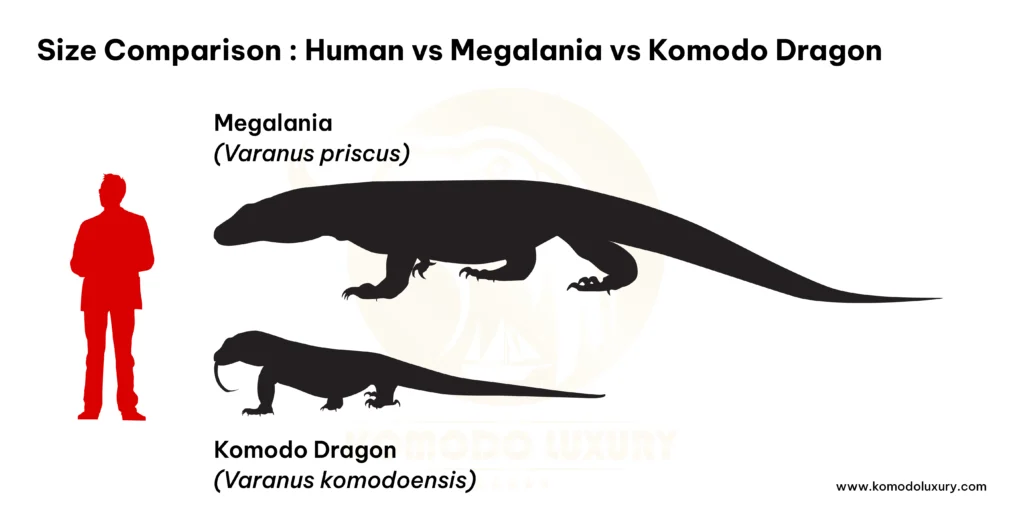
In den 1920er Jahren gingen Wissenschaftler davon aus, dass der Komodowaran eine Unterart der ausgestorbenen australischen Riesenechse Megalania prisca Komodowaran , die vor etwa 50.000 Jahren ausstarb. DNA-Analysen haben jedoch gezeigt, dass es sich um zwei verschiedene Arten handelt, obwohl sie einen gemeinsamen Vorfahren haben. Heute Komodowaran der Komodowaran als eigenständige Art, die sich in Indonesien separat entwickelt hat. Als Spitzenprädatoren dominieren sie ihre Ökosysteme und spielen eine entscheidende Rolle bei der Aufrechterhaltung des Gleichgewichts in ihren Lebensräumen. Zudem enthält Komodowaran potenziell schädliche Bakterien und möglicherweise giftige Eigenschaften, die eine entscheidende Rolle bei seinen Jagd- und Raubstrategien spielen.
Megalania: Ancient Cousin, Not Ancestor
Australia’s Pleistocene savannas were once ruled by Varanus priscus, Megalania, a monitor lizard estimated at over 5 metres long, the largest terrestrial lizard known to science. Early 20th-century scientists actually thought the Komodo dragon was a subspecies of Megalania, but DNA analysis has since proven the two are separate species that share a common ancestor rather than a direct lineage.
Komodo dragons belong to that same giant-monitor radiation, close kin, not descendants. When Australia’s megafauna collapsed in the late Pleistocene, Megalania went with it. The smaller, island-isolated Komodo dragon survived, which is why Komodo National Park is sometimes called a living window into Ice Age Australia, the one place where the age of giant monitors never actually ended.
Weiterlesen: Komodowaran Megalania: Zwei Riesenechsen der Geschichte im Vergleich
Komodowaranvolutionäre Geschichte: Woher Komodowaran der Komodowaran laut den Fossilienfunden?
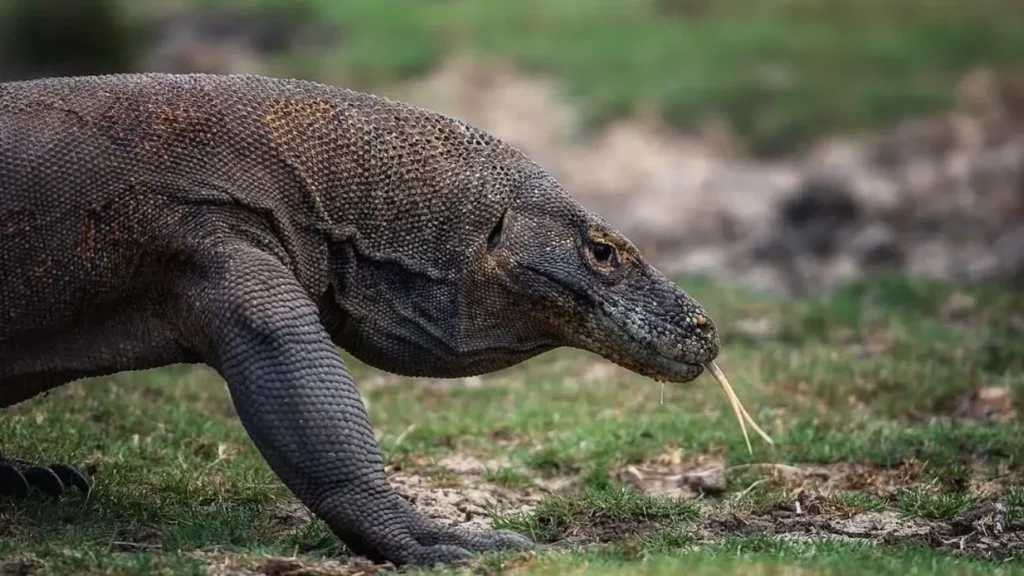
Here’s the part most people get backwards: the Komodo dragon is often assumed to be a purely Indonesian product, a modest monitor that grew huge in isolation on its islands. The fossil record tells a different story.
Fossil evidence published in 2009 by Scott Hocknull’s team, drawing on Queensland Museum material, shows the species evolved in Australia around four million years ago, as part of an entire radiation of giant monitor lizards, not a lone island oddity. Excavations in eastern Australia produced Varanus komodoensis fossils millions of years old, proving the species reached full size on a continent before it ever saw Flores. That finding quietly undermines the tidy textbook tale of “island gigantism”: the Queensland fossils indicate dragons were already dragon-sized in Australia, so the islands preserved their bulk rather than produced it.
From there, ancestors dispersed westward along the volcanic chain of the Lesser Sunda Islands using land bridges formed by falling sea levels. Fossils place dragons on Flores by roughly 1.4 million years ago, the lineage was established in Wallacea long before recorded history. On Flores, Rinca, and the surrounding islands, they evolved into apex predators, their size shaped by available prey, from small lizards to ancient pygmy elephants (Stegodon), with modern-day Javan rusa deer now their main food source.
Interestingly, a 2021 study by the Australian National University complicated the picture further, finding that the modern Komodo dragon population as we know it today actually diversified within Indonesia rather than being a simple direct transplant from Australia, opening ongoing scientific debate about exactly how the species became the dominant predator on these islands. Today’s dragons are best described as a relict giant: the last surviving member of an Australian dynasty, holding out on a handful of savanna islands.
The Evolutionary Timeline
| When | Event |
| ~4 million years ago | Komodo dragon lineage present in Australia (Hocknull et al., 2009; Queensland fossils, ~3.8–4 Ma) |
| ~1.4 million years ago | Fossils attributable to Komodo dragons appear on Flores, the lineage established in Wallacea |
| ~50,000–40,000 years ago | Giant relatives, including Megalania, vanish from Australia; the Komodo dragon becomes the last giant varanid |
| 1910 | Lieutenant van Steyn van Hensbroek investigates “land crocodile” reports on Komodo |
| 1912 | P.A. Ouwens formally describes Varanus komodoensis at Buitenzorg (Bogor) |
| 1915 | Dutch colonial authorities grant the species legal protection |
| 1980 / 1991 | Komodo National Park established; inscribed as UNESCO World Heritage Site |
Weiterlesen: Komodowaran der Komodowaran in Australien? Informieren Sie sich und Erkunden Sie die Insel Erkunden Sie !
Why Did Komodo Dragons Survive Only in Indonesia?
If the species evolved in Australia, why does it only exist in Indonesia today? The consensus explanation is isolation plus extinction elsewhere.
During Pleistocene ice ages, sea levels dropped by more than a hundred metres, narrowing the straits of Wallacea enough for a strong-swimming monitor lizard to island-hop westward along the volcanic chain. Crucially, Wallacea’s deep channels never closed completely, which kept Asian big cats, wild dogs, and other mainland carnivores out. When seas rose again, the populations on Flores and its satellite islands were cut off, and cut off, too, from the mainland catastrophes that later wiped out their Australian relatives. On their dry savanna islands, dragons kept what mattered: abundant deer and pig prey, no competing large carnivores, and (for most of history) no human hunting pressure heavy enough to erase them.
That balance is still dynamic, not static: the dragon population on Padar Island went extinct in the twentieth century after its prey base collapsed, which is part of why the species is now listed as Endangered on the IUCN Red List rather than the “Vulnerable” rating it held in earlier decades.
Ist der Komodowaran Verwandter der Dinosaurier?
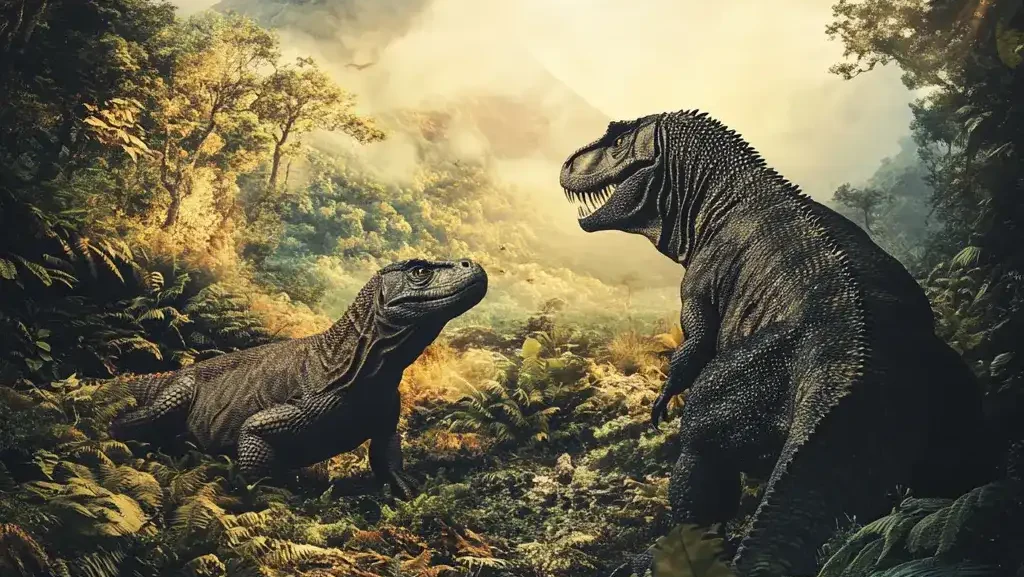
Obwohl er oft als „lebender Dinosaurier“ bezeichnet wird, Komodowaran der Komodowaran nicht direkt mit Dinosauriern wie dem T-Rex oder dem Brachiosaurus verwandt. Die Dinosaurier starben vor 66 Millionen Jahren aus, während die Familie der Varanidae erst vor etwa 40 Millionen Jahren entstand.
Es gibt jedoch einige adaptive Ähnlichkeiten zwischen Komodowarane Dinosauriern. Ein Beispiel ist ihr tödlicher Biss, der schädliche Bakterien enthält – ähnlich wie das Gift bei Dinosauriern. Dieses Phänomen wird als konvergente Evolution bezeichnet, bei der zwei nicht miteinander verwandte Arten aufgrund ähnlicher Umweltbedingungen ähnliche Merkmale entwickeln. Das Gift der Komodowarane weist Komodowarane Ähnlichkeiten mit dem von Schlangen auf, da beide Gift als Jagd- oder Verteidigungsmechanismus gegen Beute oder Bedrohungen einsetzen. Obwohl der Komodowaran echter Dinosaurier Komodowaran , hat er einige Überlebensmerkmale entwickelt, die denen urzeitlicher Raubtiere ähneln.
Was sind die Mythen und die kulturelle Bedeutung des Komodowaran?
For the Manggarai people of Flores, the Komodo dragon is far more than a giant lizard, it’s a mystical being intertwined with human life and spirituality. In the Komodo village telling, the Putri Naga, the Dragon Princess, bore twins: a human son, Si Gerong, and a dragon daughter, Orah. Raised apart, the two met as hunters chasing the same deer; when Si Gerong raised his spear against her, the princess appeared between them and revealed their kinship. To this day, islanders call the animals ora and treat them as kin, a living reason the community protected the species for generations before any statute did.
That belief in twin-sibling kinship has encouraged a genuine coexistence: locals traditionally avoid hunting the dragons, and in turn the dragons rarely pose a threat to people. The giant lizard is also seen as a guardian of nature, capable of sensing bad intentions and maintaining the balance of the ecosystem. You can go deeper into this tradition in the legend of the Komodo Dragon and in the Ora legend, which preserves the older, community-held version of the same story.
Why are Komodo dragons important? Ecologically, they’re the apex predator regulating deer, boar, and buffalo populations across the park. Scientifically, they’re a living window into large-varanid evolution stretching back to Australia. Culturally, they’re kin in the origin story of the island’s own people. Three reasons, one species, anchoring an entire UNESCO World Heritage Site.
Was sind 5 interessante Fakten über Komodowarane?
While the Komodo dragon’s evolutionary history and cultural legends reveal its remarkable past and significance, there are also some fascinating biological and behavioral traits that make this giant lizard truly unique. Here are 5 interesting Komodo dragon facts that highlight their extraordinary adaptations and survival skills:
- Die größte lebende Eidechse – Ausgewachsene Komodowarane bis zu 3 Meter lang werden und bis zu 150 kg wiegen. Aufgrund ihrer enormen Größe sind sie die größten heute lebenden Eidechsen und auf den ersten Blick unverkennbar.
- Spitzenprädator – Komodowarane an der Spitze ihrer Nahrungskette; sie jagen Hirsche und kleinere Reptilien und ernähren sich gelegentlich von Aas. Ihre kräftigen Gliedmaßen, scharfen Krallen und ausgeprägten Sinne machen sie zu äußerst effektiven Jägern in freier Wildbahn.
- Giftbiss – Diese Eidechsen verfügen über Giftdrüsen, die Giftstoffe absondern, und ihr Speichel enthält schädliche Bakterien. Diese Kombination hilft ihnen, ihre Beute zu schwächen oder bewegungsunfähig zu machen, wodurch sie effizienter jagen können.
- Parthenogenese – Weibliche Komodowarane sich ohne Männchen ungeschlechtlich fortpflanzen und dabei lebensfähige männliche Nachkommen zeugen. Diese seltene Fähigkeit ermöglicht es den Populationen, sich selbst in isolierten Lebensräumen zu erhalten.
- Exceptional Swimming Ability – Komodo dragons can swim surprisingly well, allowing them to move between islands in their habitat. This skill helps them expand their territory and access new hunting grounds across the Indonesian archipelago.
Diese Komodowaran geben einen Einblick in ihre außergewöhnliche Biologie und ihre Überlebensstrategien und verdeutlichen, warum sie als eines der beeindruckendsten Reptilien der Welt gelten.
Weiterlesen: Komodowaran und FaktenKomodowaran : Du wirst nicht glauben, wastatsächlich wahr ist!
Komodowaran : Wo sind Komodowaran anzutreffen?
Komodowarane auf fünf Inseln in Indonesien: Komodo, Rinca, Flores, Gili Motang, Nusa Kode und Gili Dasami. Sie bevorzugen trockene Savannen, tropische Wälder und felsige Küsten. Obwohl sie in tropischen Wäldern besonders gut gedeihen, sind sie auf diesen Inseln auch in Grasland- und Buschlandgebieten anzutreffen. Die hohen Temperaturen in der Savanne helfen ihnen bei der Jagd, da sie in diesen Umgebungen auf kurze Sprintstrecken angewiesen sind, um ihre Beute aus dem Hinterhalt zu überfallen.
Leider ist ihr natürlicher Lebensraum durch den Klimawandel und menschliche Aktivitäten bedroht. Der steigende Meeresspiegel stellt eine große Gefahr für den Lebensraum der Komodowarane dar und führt zu einer weiteren Zersplitterung und Isolierung ihrer Populationen. Die Bemühungen, sie durch Komodo Nationalpark, einem UNESCO-Weltkulturerbe, haben es jedoch ermöglicht, mehr als 80 % der weltweiten Komodowaran zu erhalten. Dieser Park ist nicht nur ein Schutzgebiet für die Komodowaran, sondern auch für andere seltene und gefährdete Arten.
Weiterlesen: Komodowaran : Wo sie leben und wie man sie beobachten kann
Schutzstatus: Schutz des Komodowaran
The Komodo dragon is currently listed as Endangered on the IUCN Red List, an uplisting from its earlier “Vulnerable” status that reflects continued habitat loss, poaching pressure, and fragmentation across its already-restricted range. The Indonesian government established Komodo National Park in 1980, a UNESCO World Heritage Site now sheltering over 1,700 dragons, with ongoing habitat restoration, research, and education programs, and international trade in the species is prohibited under IUCN protections. One added genetic wrinkle: because parthenogenesis produces only male offspring, isolated populations can face female shortages and elevated inbreeding risk, adding another layer to long-term survival planning.
Weiterlesen: Die Geschichte des Komodo Nationalpark: Ein Naturwunder und UNESCO-Weltkulturerbe
Wo kann man Komodowaran Komodo Nationalpark sicher einen Komodowaran beobachten?
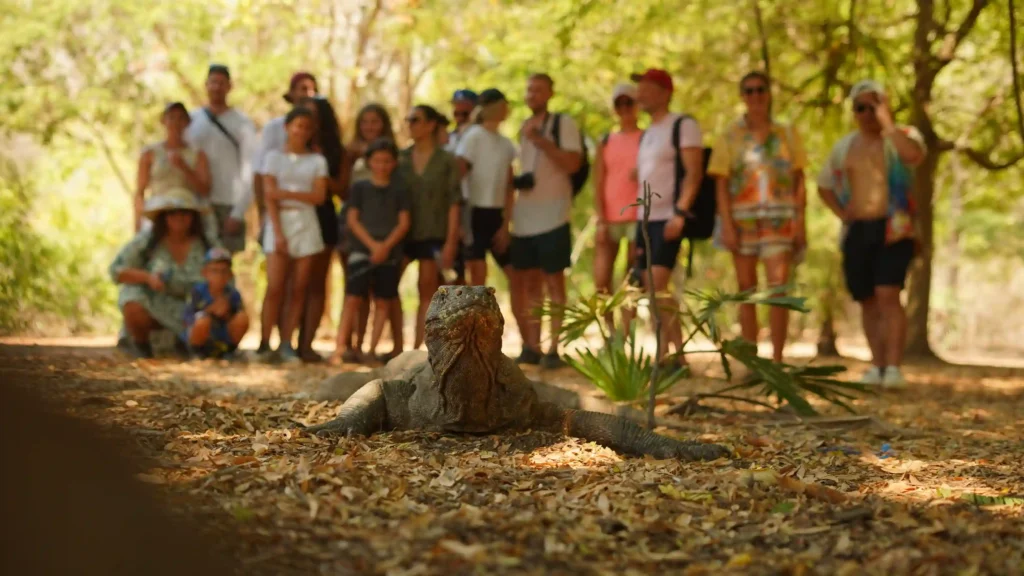
Obwohl sich der Lebensraum Komodowaranüber mehrere Inseln erstreckt, sind die besten Orte, um sie sicher zu beobachten, Rinca Komodo und Rinca . Beide Inseln gehören zum Komodo Nationalpark, der streng geschützt ist. Hier werden Besucher von lokalen Führern begleitet, die Experten für das Verhalten der Komodowarane sind Komodowarane dafür sorgen, dass man sie sicher beobachten kann.
Dank strenger Vorschriften können Besucher den Drachen ganz nah kommen, ohne Angst vor Angriffen haben zu müssen – solange sie sich an die Regeln halten. Auf diesen beiden Inseln gibt es einen ausreichend großen Bestand an Komodowarane, sodass die Wahrscheinlichkeit, einem zu begegnen, sehr hoch ist. Außerdem können Sie atemberaubende Naturlandschaften genießen, darunter wunderschöne Strände und kristallklares Wasser.
Weiterlesen: Komodo-Insel vs. Rinca : Wo kann man am besten Komodowarane beobachten?
Erleben Sie ein sicheres Abenteuer und beobachten Sie die Komodowaran Komodo Luxury
For an adventure that’s not only exciting but also comfortable, Komodo Luxury offers complete tour packages to Komodo Island. Our tours include luxurious accommodations, experienced guides, and a strong focus on safety, allowing you to explore Komodo National Park with confidence.
One of the most iconic ways to experience this journey is through a luxury phinisi Komodo, where you can sail across the islands on a beautifully crafted traditional vessel combined with modern luxury amenities. This experience allows you to enjoy curated island routes, personalized service, and breathtaking ocean views, giving you a seamless way to explore the habitat of Komodo dragons while traveling in comfort and style.
Der Komodowaran ein lebendiges Zeugnis für die Wunder der Evolution in Indonesien. Von uralten Wanderungen über einzigartige Anpassungen bis hin zu faszinierenden kulturellen Geschichten – der Komodowaran als nationaler Schatz gewürdigt zu werden. Diesen „Drachen“ mit eigenen Augen zu sehen, ist nicht nur ein unglaubliches Erlebnis, sondern auch eine wertvolle Lektion über die Kraft der Natur und die Artenvielfalt Indonesien.
If you want to witness this once-in-a-lifetime experience, make sure to choose a trusted tour that combines safety, comfort, and education. Don’t miss out on the chance to see history unfold right in front of you. Book your Komodo Island tour today and witness the living history of the Komodo dragon!

Häufig gestellte Fragen zur Geschichte und zu den Sehenswürdigkeiten v Komodowaran
Four million years of history are still walking around Komodo and Rinca Island today. Komodo Luxury brings guests face-to-face with them on sailing trips from Labuan Bajo, see the Komodo sailing trip itineraries for 2D1N and 3D2N routes.
Erleben Sie diese Geschichte hautnah am Ort des Geschehens: Unsere Touren kombinieren die Loh-Liang-Wanderung mit „ Padar “ und Pink Beach in einer Rundtour – erleben Sie die Komodo- Reisepakete oder planen Sie eine gemächlichere Route auf einer Tauchkreuzfahrt.
By the Komodo Luxury Expedition Team, a licensed Komodo National Park tour operator running daily expeditions from Labuan Bajo since 2015. Fleet, rates and itineraries: Komodo yacht charter.