
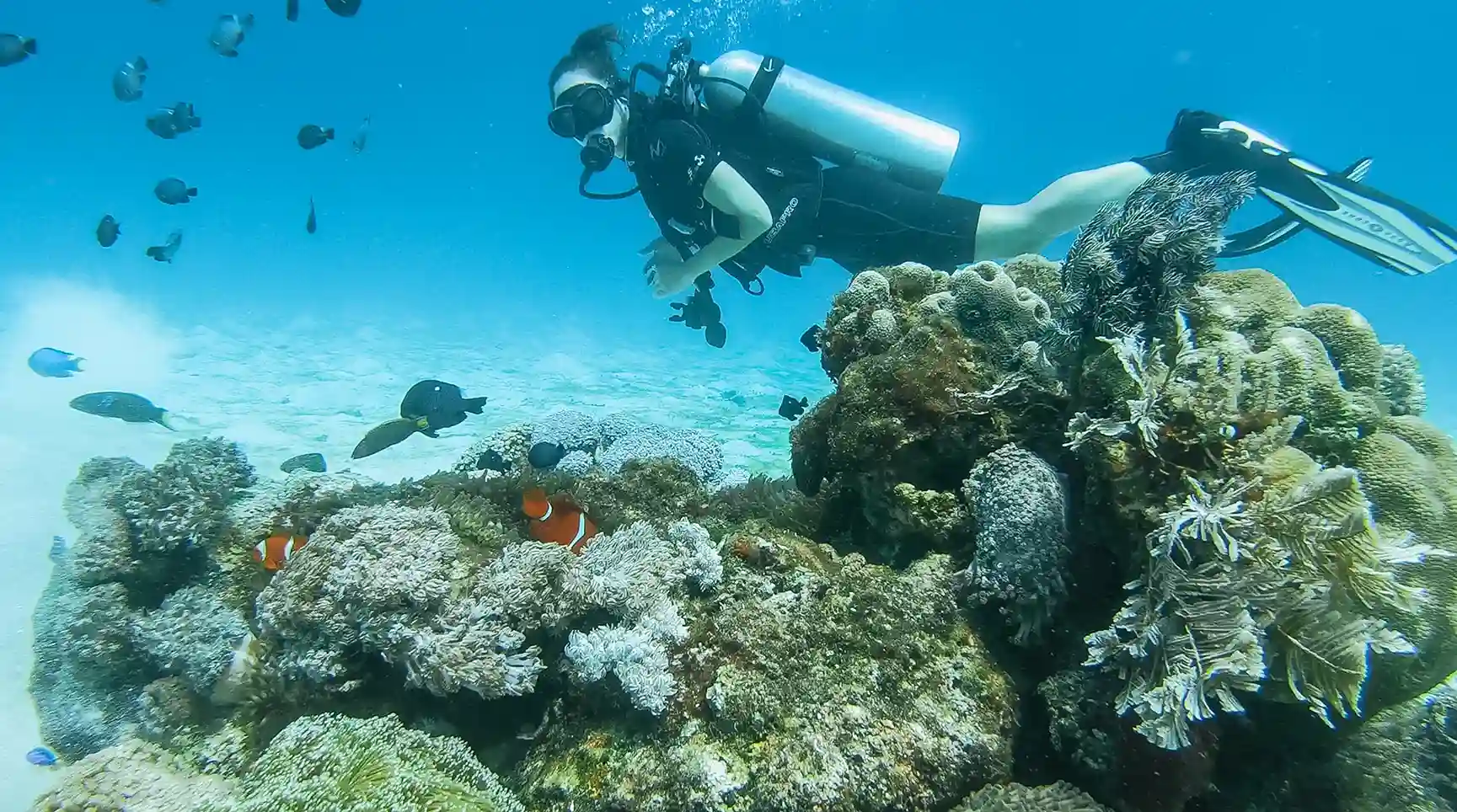
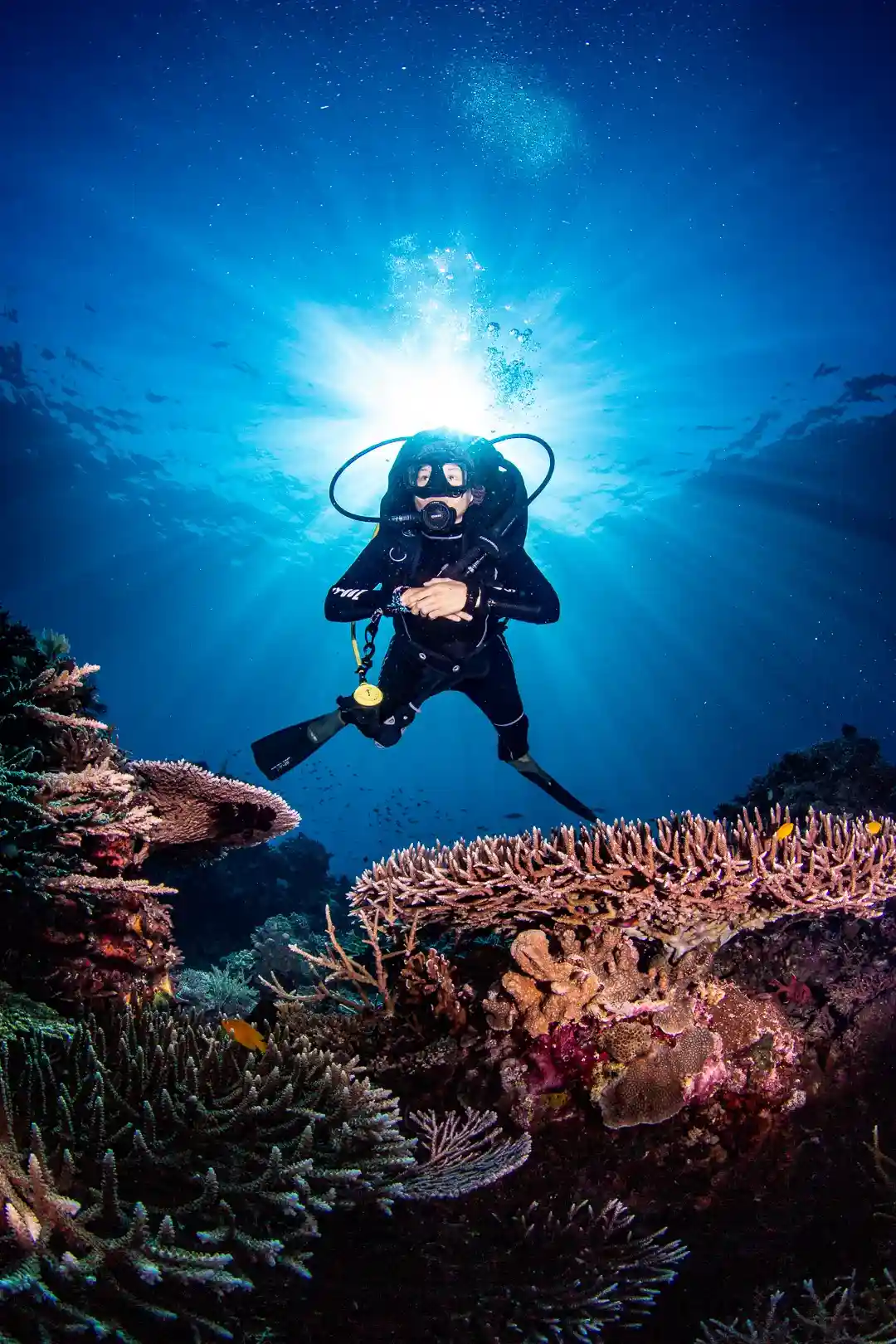
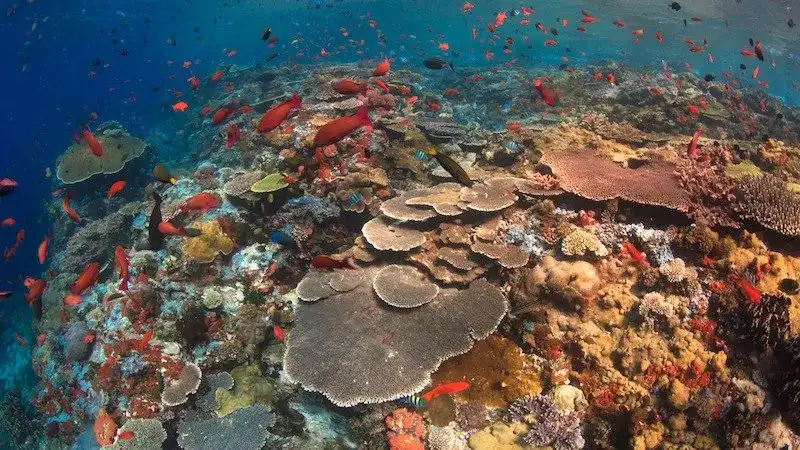
Komodo Island diving is considered among the finest scuba diving experiences on the planet — and for good reason. Nestled within Komodo National Park, a UNESCO World Heritage Site in East Nusa Tenggara, Indonesia, these waters sit at the heart of the Coral Triangle and draw nutrients from the confluence of the Indian and Pacific Oceans. The result is an underwater world of extraordinary richness: over 1,000 species of fish, 260 species of coral, dramatic drift dives, and legendary encounters with oceanic manta rays.
Whether you are an experienced diver chasing the adrenaline of strong currents at Castle Rock, or a beginner discovering the vibrant shallows at Siaba Island, Komodo National Park has a dive for you. With Komodo Luxury, you access all of this aboard a premium liveaboard or private yacht charter, with certified dive guides who know these waters intimately.




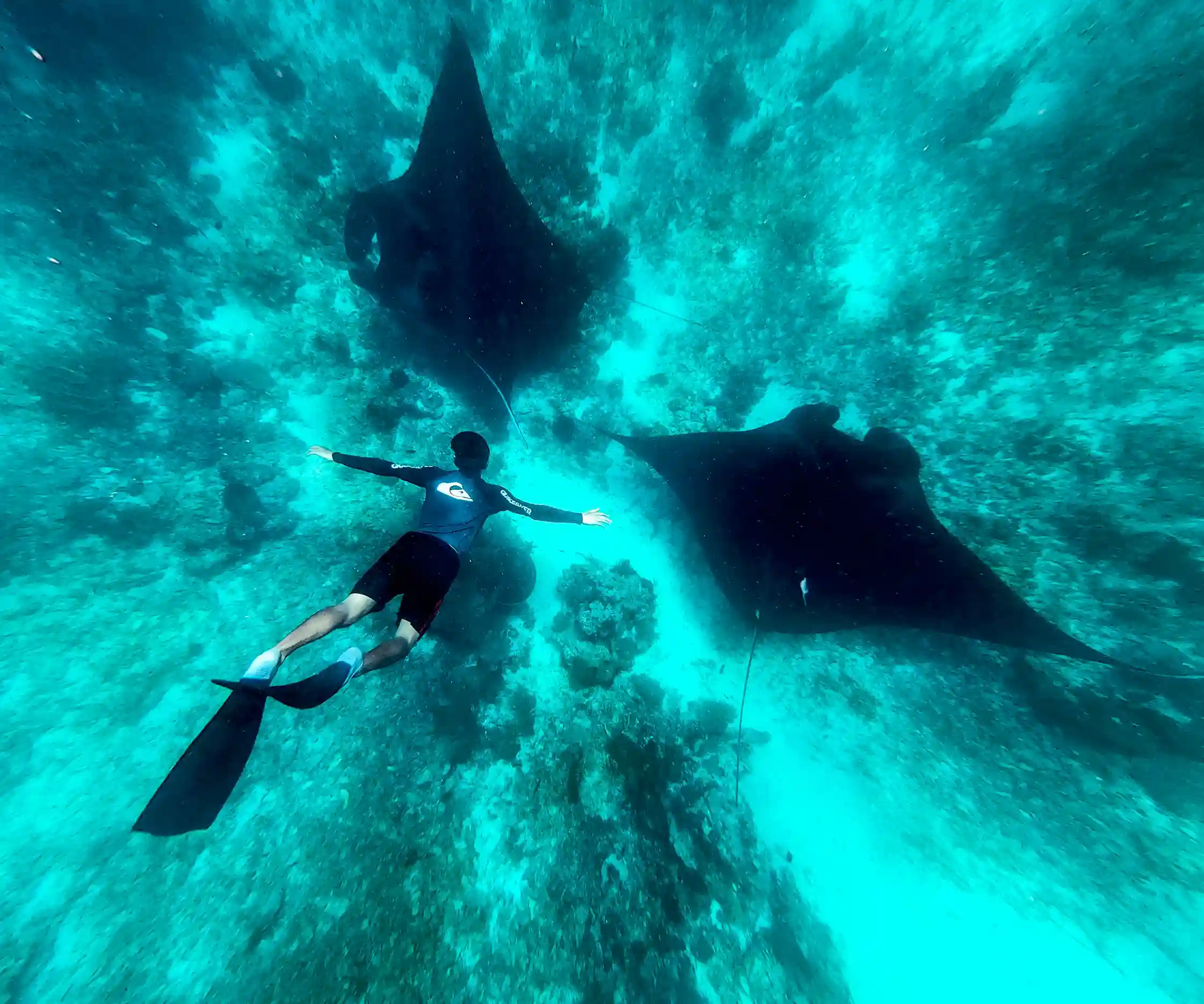
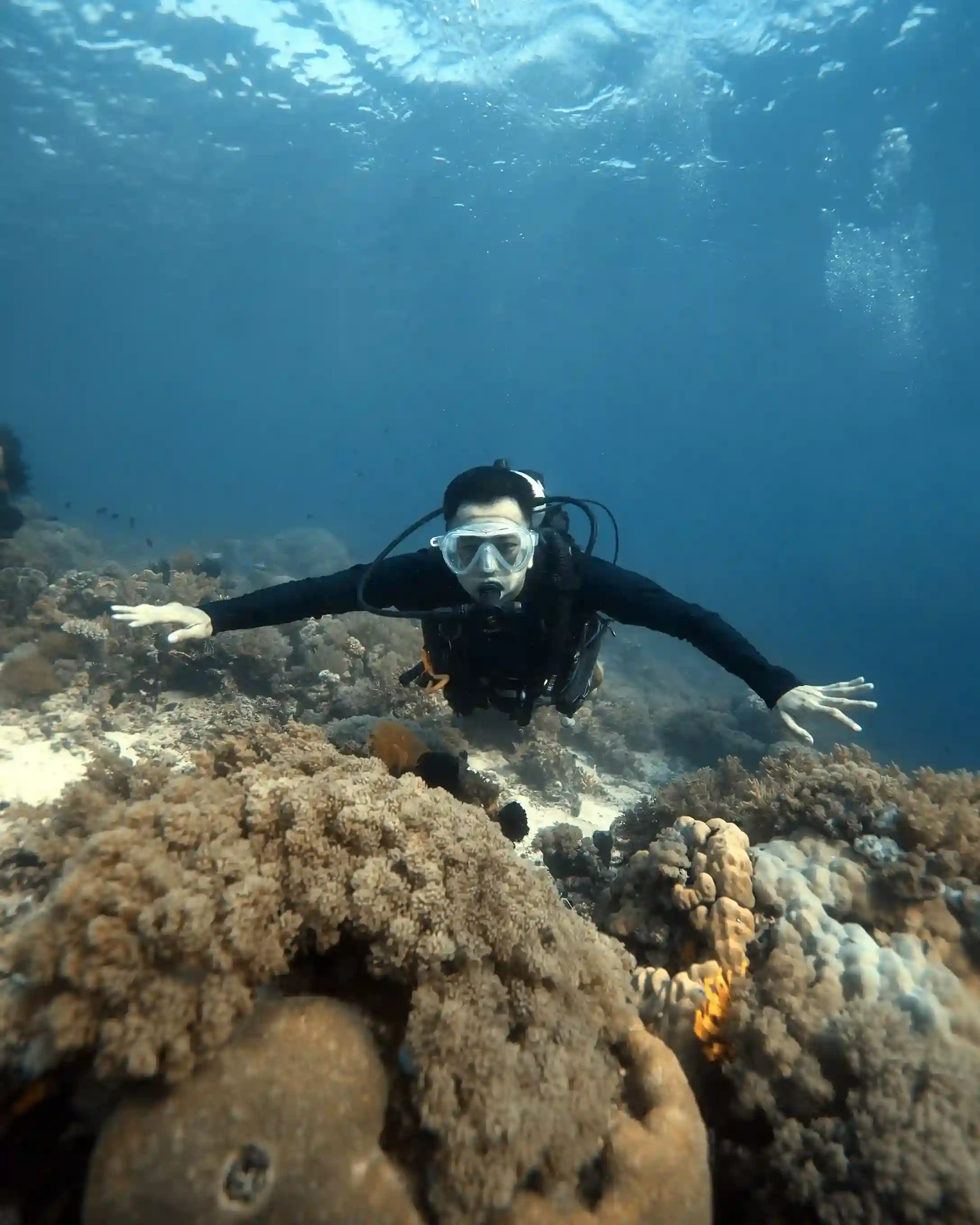
Komodo National Park is divided into three broad diving regions, each with distinct character.
A Komodo liveaboard itinerary with Komodo Luxury can cover all three regions over 3 to 7 days, giving you the full range of experiences the park has to offer.
Komodo diving is possible year-round, but conditions vary significantly:
This is the peak diving season. Visibility in the northern sites peaks at 25–30 meters, seas are calm, and the weather is stable. July and August are the busiest months. April–May and September–November offer excellent conditions with fewer crowds.
Visibility in the north can decrease, but this is the prime season for manta ray encounters in the south. Plankton blooms from the monsoonal currents bring large aggregations of mantas to Manta Alley and surrounding sites. Conditions at central sites often remain good.
26–29°C in the north year-round. The south can drop to 20–24°C during manta season, making a 5mm wetsuit advisable.
Komodo Luxury provides premium access to Komodo Island diving through private yacht charters and luxury liveaboard tours. Our certified dive guides and divemasters know the park's tidal patterns intimately — they time dives at Batu Bolong and Castle Rock to align with optimal current conditions, maximizing your marine life encounters and minimizing risk.
Our packages include all diving equipment, certified guide support, and seamless integration with the full Komodo National Park experience — including guided dragon trekking on Komodo and Rinca Islands.
เรือวีไอพี
1-21 คน
เริ่ม ต้นที่ 60.5 ล้านรูเปียห์ /คืน
เรือวีไอพี
1-21 คน
เริ่ม ต้นที่ 60.5 ล้านรูเปียห์ /คืน
เรือวีไอพี
1-21 คน
เริ่ม ต้นที่ 60.5 ล้านรูเปียห์ /คืน

เรือวีไอพี
8-18 คน
ราคาเริ่มต้นที่ 6,400 ดอลลาร์สหรัฐ ต่อคืน
เรือวีไอพี
2-10 คน
เริ่ม ต้นที่ 86,190,000 รูเปียห์ /คืน
Yes, with the right site selection and guidance. Siaba Island, Manta Point (shallow sections), Tatawa Besar, and Sebayur Island offer calm conditions and rich marine life suitable for beginner and newly certified divers. Avoid high-current sites like Batu Bolong and Castle Rock until you have at least 30+ logged dives and solid buoyancy control.
Komodo National Park is home to over 1,000 fish species. Regular sightings include oceanic manta rays, reef sharks (whitetip, grey, blacktip), Napoleon wrasse, giant trevally, hawksbill and green turtles, moray eels, nudibranchs, pygmy seahorses, and barracuda. In season, whale sharks and hammerhead sharks are occasionally encountered at northern sites.
Fly to Labuan Bajo Airport (LBJ) — approximately 1 hour from Bali (Denpasar). All Komodo Luxury liveaboards depart from Labuan Bajo harbor, just 10 minutes from the airport. We can arrange airport transfers as part of your package.
Komodo Luxury provides full diving equipment aboard our liveaboards. If you have personal gear you prefer — particularly your own wetsuit, BCD, or regulator — you are welcome to bring it. An underwater camera is strongly recommended.
For beginner-friendly sites, an Open Water Diver certification (PADI or SSI) is sufficient. For advanced sites with strong currents (Batu Bolong, Castle Rock, the Cauldron), Advanced Open Water certification and a minimum of 30 logged dives is recommended. Our divemasters will brief all guests on appropriate sites for their experience level.
With a reputable operator, the right site selection for your skill level, and adherence to your divemaster's guidance, Komodo diving is safe and enormously rewarding. Always carry a surface marker buoy (SMB), and never dive beyond your certification level at current-heavy sites.
ด้วยประสบการณ์กว่า 10 ปีในการสร้างสรรค์การผจญภัยล่องเรือสุดหรู Komodo Luxury ภูมิใจที่ได้เป็นพันธมิตรกับ IndonesiaJuara Trip ผู้ได้รับรางวัล Travelers' Choice Award ประจำปี 2025 จาก TripAdvisor ค้นพบสิ่งที่ดีที่สุดในการท่องเที่ยวเกาะโคโมโดและราจาอัมปัตด้วยทริปล่องเรือฟินิซีที่เราคัดสรรมาเป็นพิเศษและแผนการเดินทางที่ปรับแต่งได้ตามความต้องการของคุณ
ภูมิใจที่ได้เป็นพันธมิตรกับผู้ประกอบการทัวร์ชั้นนำที่ได้รับรางวัลของอินโดนีเซีย


เรารับชำระเงิน

เรือยอดนิยม
ติดต่อเรา
| เจแอล Pemuda I No.1, เดนปาซาร์, บาหลี | |
| เจแอล นายวิตาลิส เจอบาร์, การอน โทโล, เค็ค โคโมโด, คับ. มังกาไร บารัต, นูซา เตงการา ติมูร์ | |
| (+62) 811 3823 875 [EN] | |
| (+62) 811 3810 8110 [EN] | |
| [email protected] | |
| [email protected] |
ติดตามเรา